
Designing like dr. Frankenstein
What happens when you combine a lightning storm, curiosity verging on obsession and a laboratory table? An extraordinary creation comes to life!
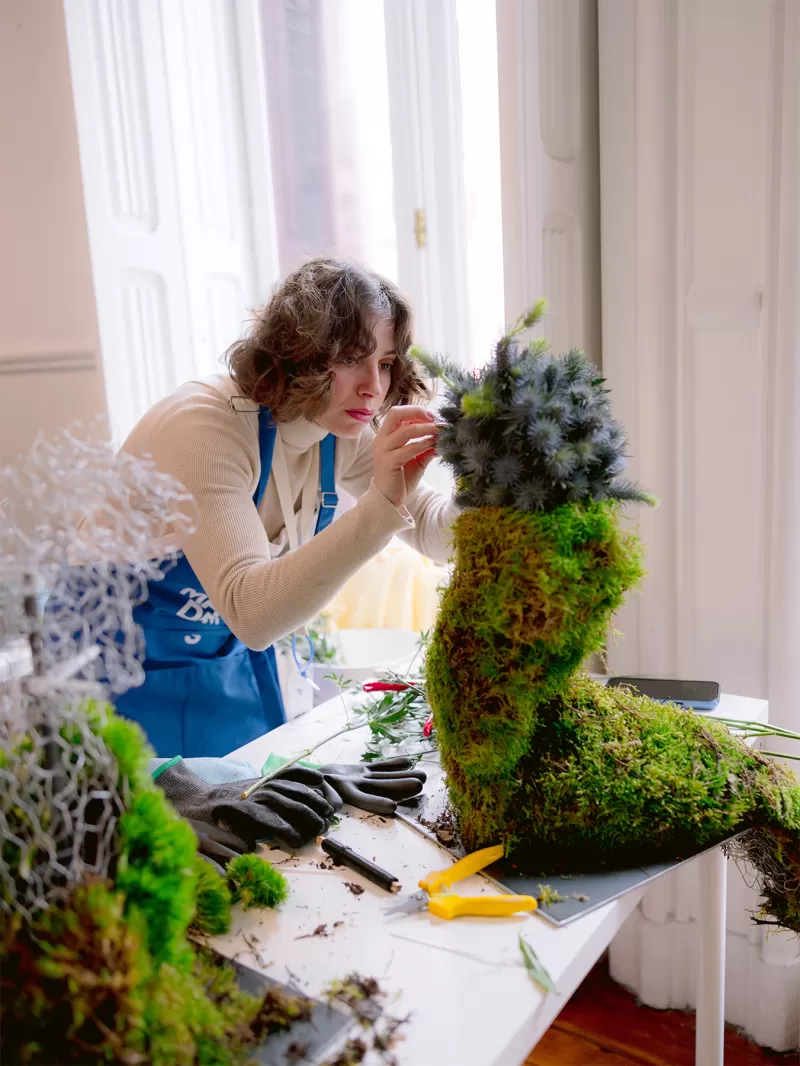
Except this time, the laboratory table is swapped for an iron base, the lightning for Studio Lilo design principles and the materials to experiment with are botanical. The result is not Frankenstein’s monster, but stunning floral sculptures with unusual proportions, intriguing textures and forms that seem to develop a character of their own.
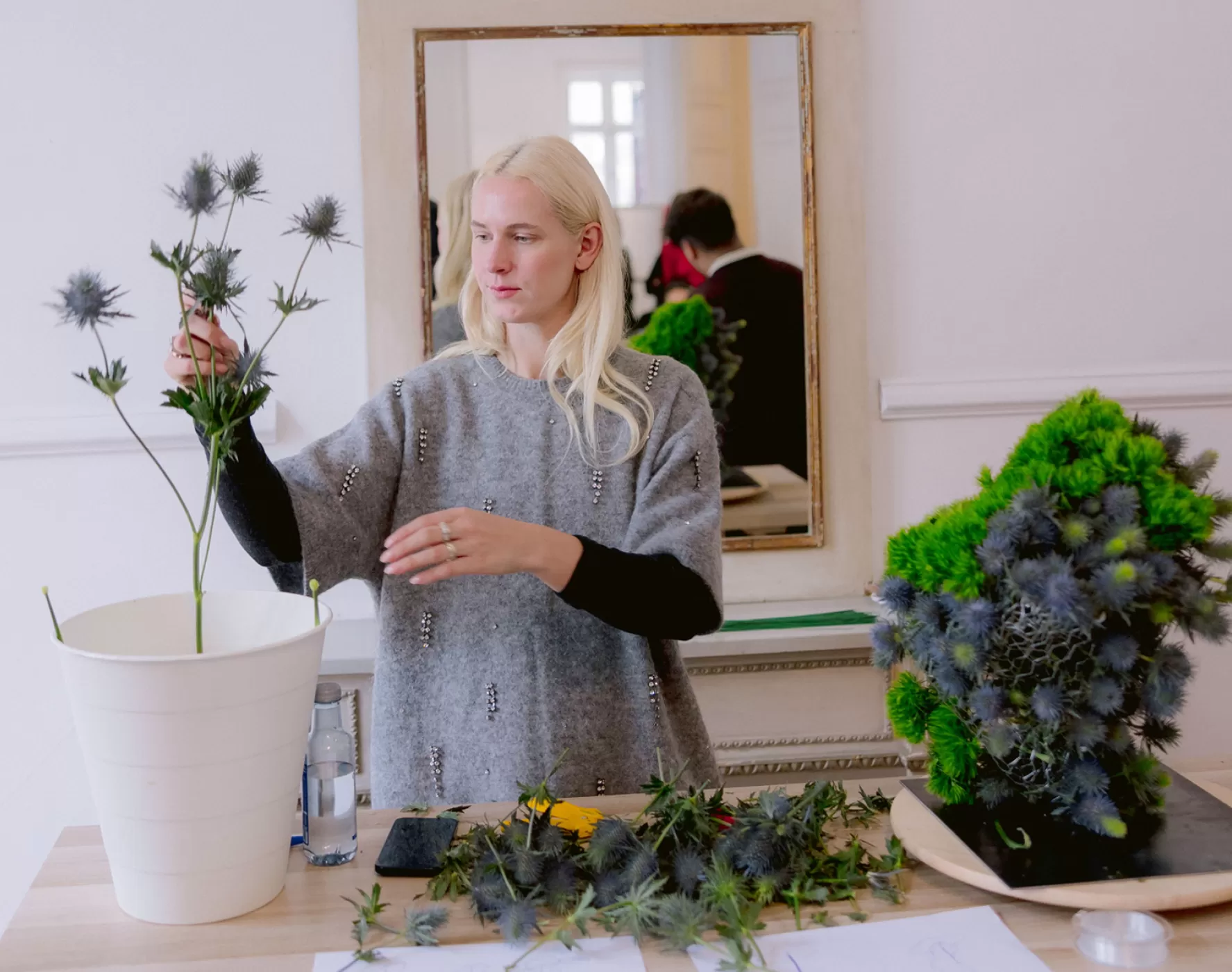
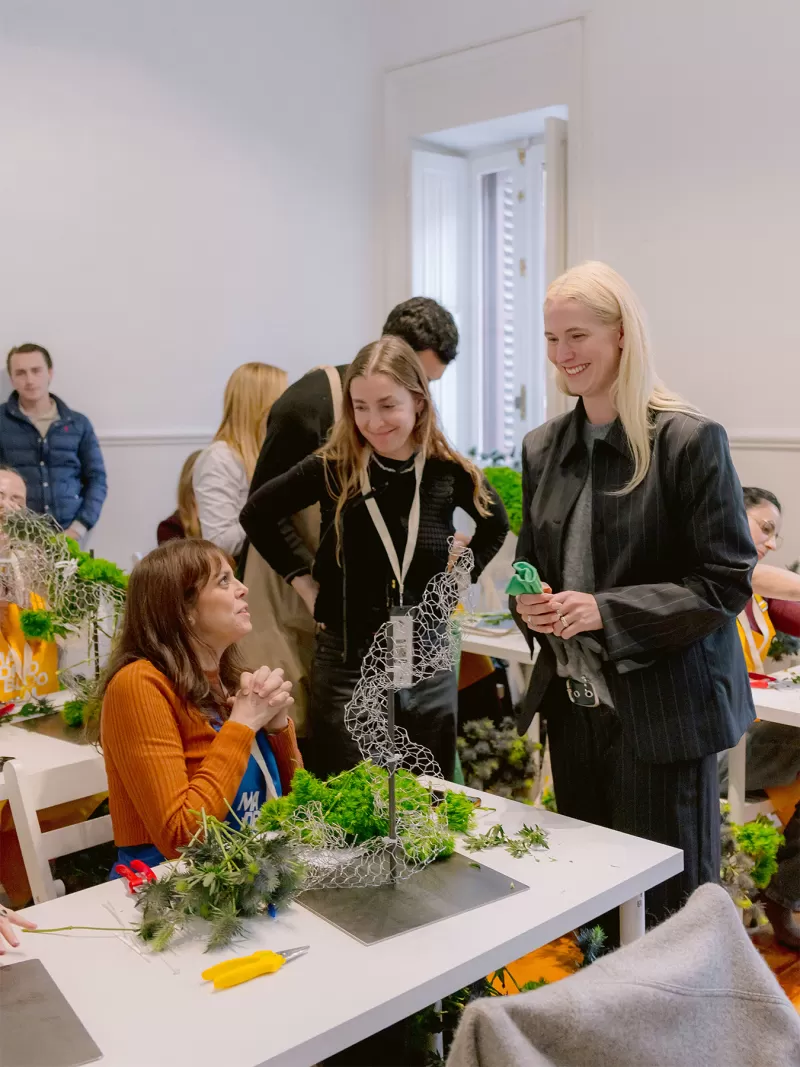
Participants at Madrid Blooms created sculptural pieces using just three main materials: Eryngium Supernova Questar®, Clavel Green Trick and moss.
Meet the mind behind the masterclass
The masterclass at Madrid Blooms was led by Studio Lilo. Lilo Klinkenberg is known for her sculptural, often monochrome work. Her floral installations feel architectural, exploring the space where nature, art and design meet. Her work includes floral design for fashion shows, film and photography productions, events and exhibitions.
In an interview with Madrid Blooms, Lilo explains what she hopes students take away from her class:
“To not be afraid of using natural material in a different way, to use it how a sculptor would use clay or like a fashion designer would use fabric. To see it as a structure and to see the colour as a whole more than just seeing the single flower.”
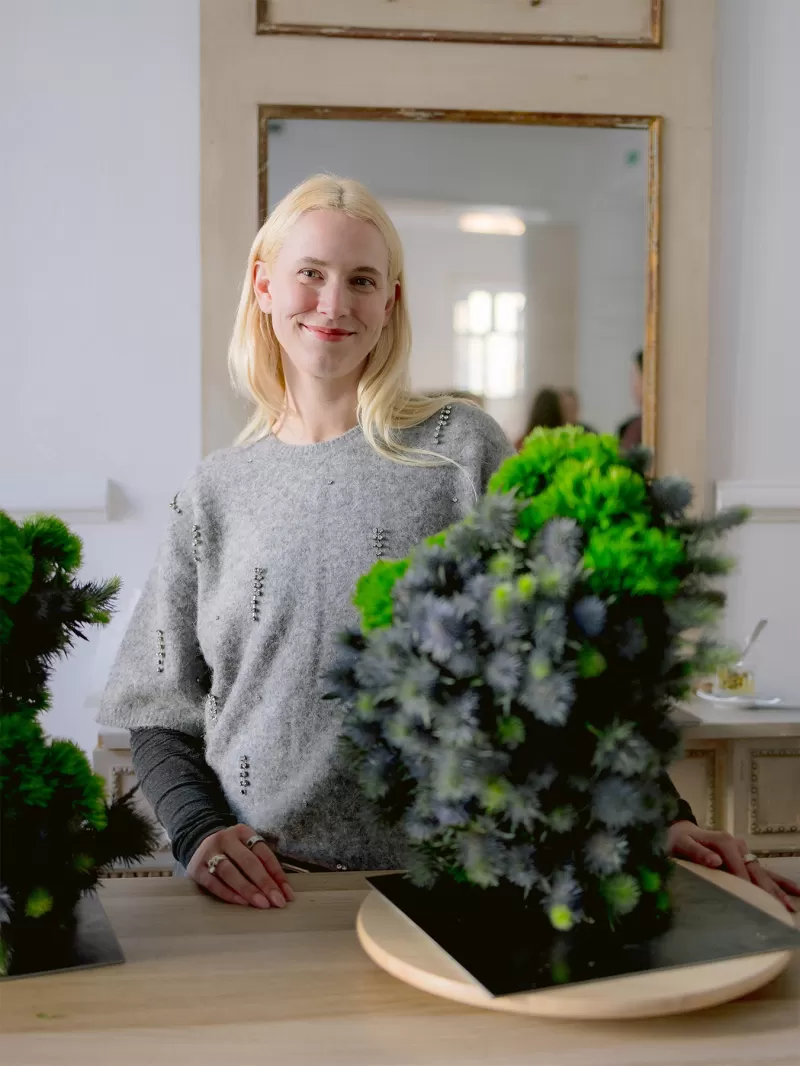
That design philosophy is clearly reflected in her work. Some pieces look soft and inviting, almost making you want to reach out and touch them, while others have something slightly strange or unsettling about them. It is this tension between softness and discomfort that makes her work so intriguing. By using botanical materials in unexpected ways, she challenges familiar ideas of what floral design can be and invites us to look at flowers from a different perspective.
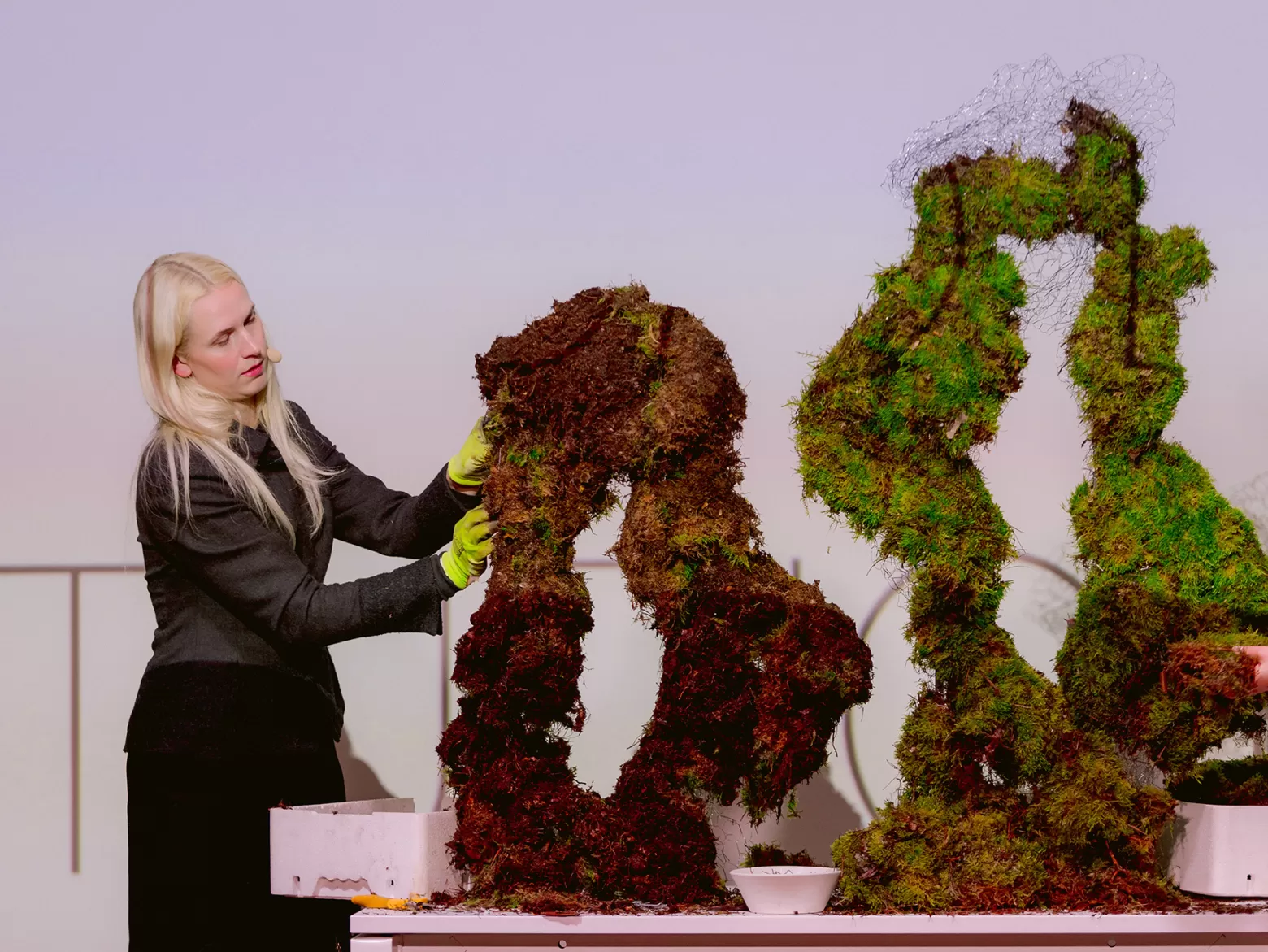
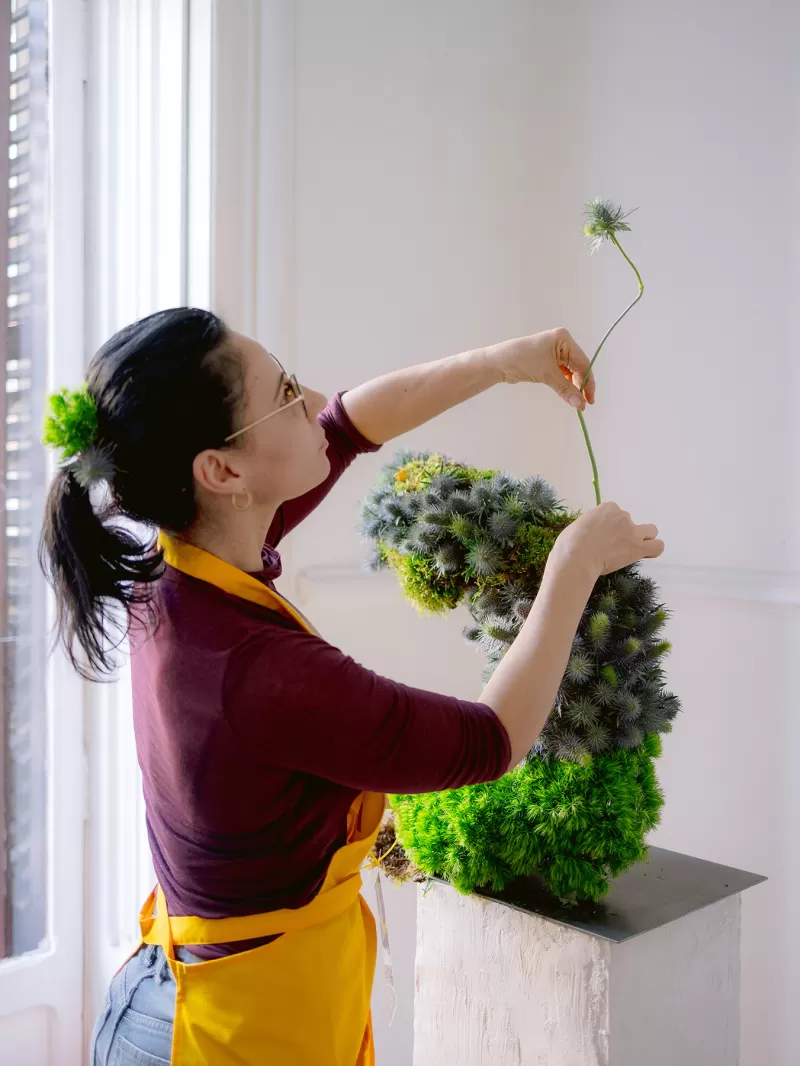
Lilo Klinkenberg during her demonstration on the Madrid Blooms stage.
From literature to floral art
Inspiration for floral design can come from anywhere; Lilo Klinkenberg mentions urban landscapes, nature and art as few of her personal inspirations. Literary art can be a fascinating source of inspiration as well.
Mary Shelley’s Frankenstein, first published in 1818, tells the story of a brilliant creator and the creature he brings to life. More than two centuries later, the novel continues to inspire artists, filmmakers and designers.
We can certainly recognise Frankenstein-esque elements in the Madrid Blooms workshop. Unexpected organic shapes emerge from contrasting materials. Proportions are exaggerated, familiar flowers are used in unfamiliar ways and, step by step, each sculpture begins to take on a life of its own.
Shaping the unexpected
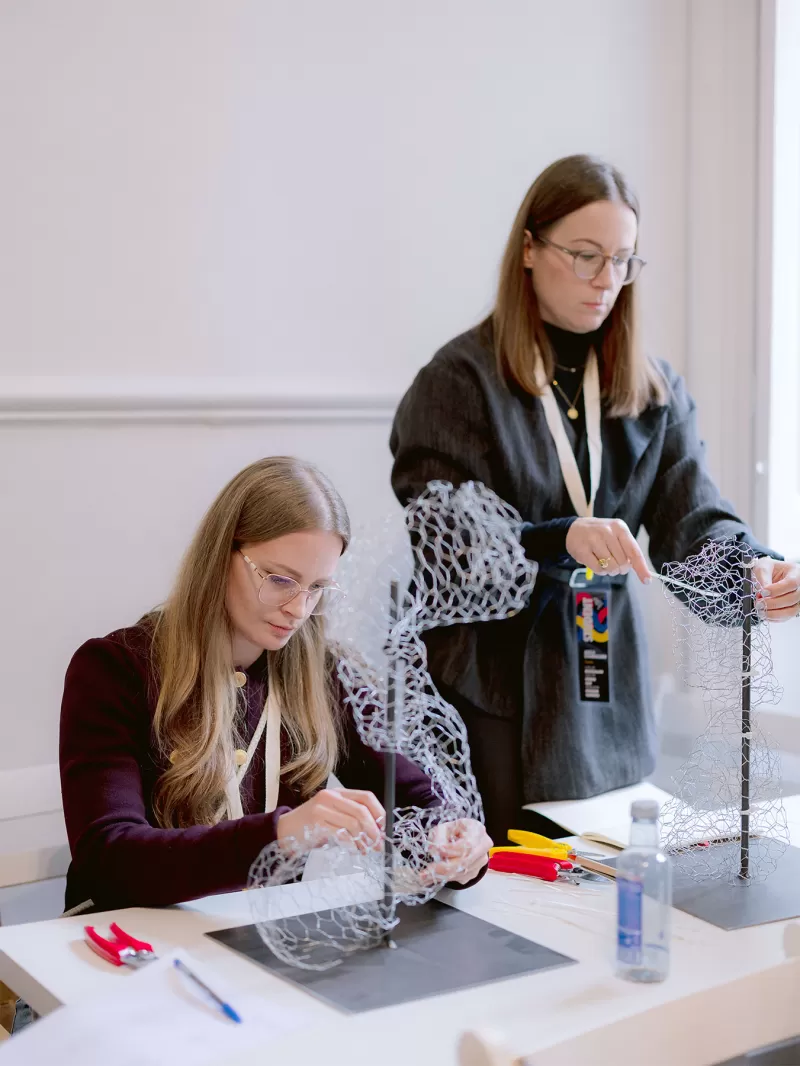
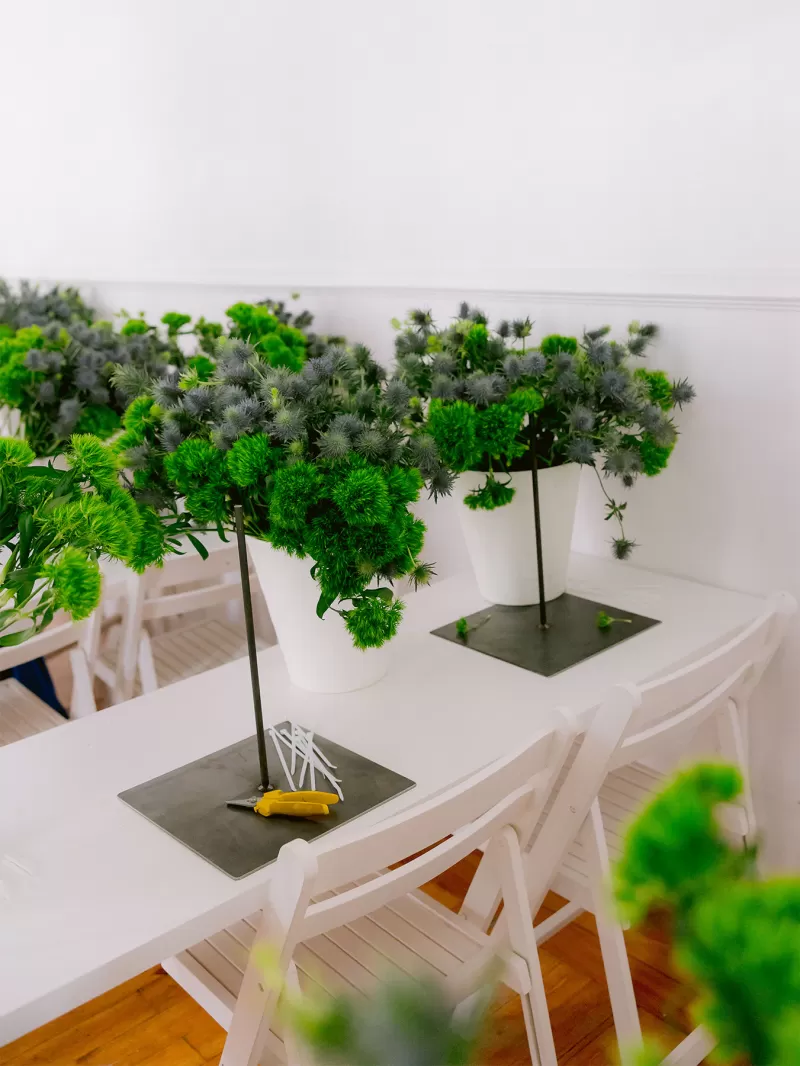
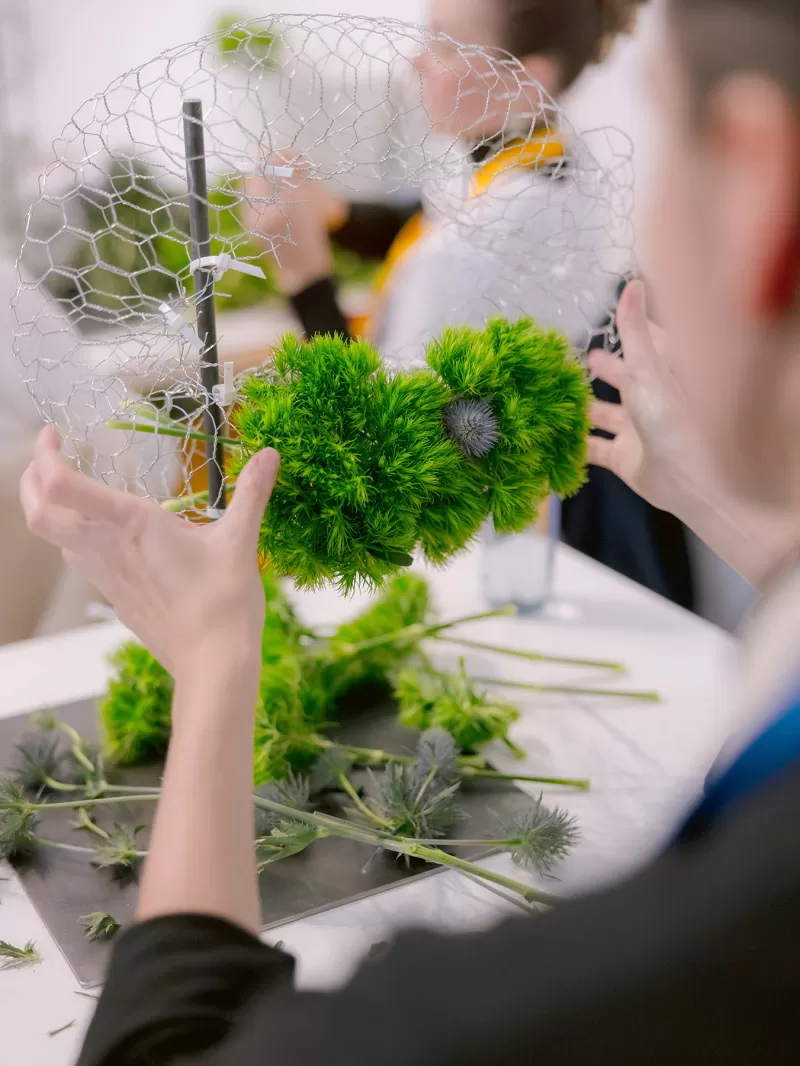
The participants found their workstations set-up with the ingredients needed to build the structure: a metal base with a central rod, wire cutters, tie wraps and chicken wire. Equipped with these materials they start to form intriguing shapes, setting their imagination free in the process. Working with a limited botanical palette lets the architectural shapes speak, while still allowing interesting contrasts in textures, shapes and colours to emerge.
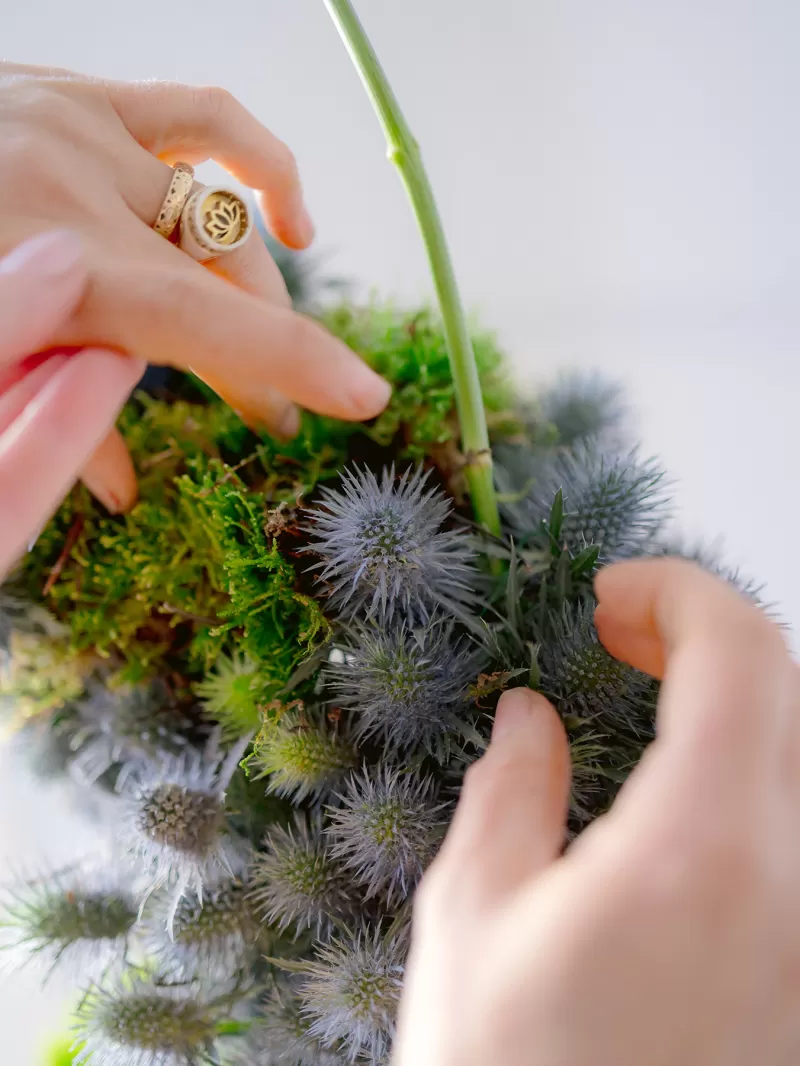
Eryngium Supernova Questar®, Clavel Green Trick and moss each brought a very different character to the designs. Supernova Questar® is a distinctive Eryngium variety with an large blue flower with a green tip.
Its strong shape and spiky texture makes it particularly suited to this sculptural way of working. Grouped closely together, the flower heads create dense, spiky surfaces. Eryngium dries well, allowing you to enjoy your work for a long time.
Clavel Green Trick adds soft, rounded volume and a bright green colour and the moss adds an interesting velvety texture to the mix. By changing the height, direction and density of the materials, participants gradually built organic masses, rhythms and patterns around the metal framework.
Abstract forms, endless imagination
As the structures developed, each one began to take on its own personality. In one design, a single Eryngium Supernova Questar® stem, with the leaves removed, stretches upwards almost like an antenna. Another design reminds us of an otherworldly botanical creature. Others remain more abstract, leaving plenty of room for interpretation.
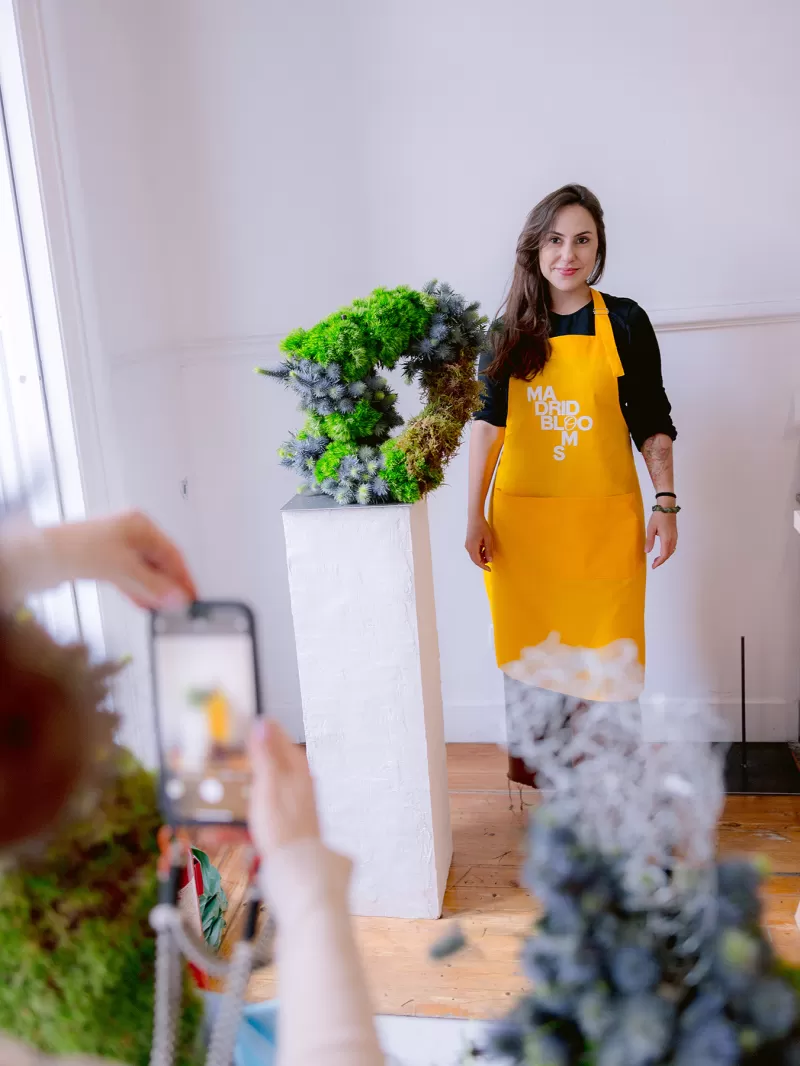
The workshop shows how much creative freedom there is in looking beyond traditional floral forms and using familiar materials in unexpected ways. The finished designs are striking from every angle. These architectural pieces would look fantastic as botanical artworks in an event space, high-end bar, hotel or shop window.
Could these designs inspire your own botanical Frankenstein creation?
Taking inspiration from the masterclass, you can start to experiment with different shapes, textures and materials. These techniques are adaptable to either a smaller or larger scale. With Halloween approaching, it might be the perfect time to bring a sculptural design to life!
Experience Madrid Blooms
Madrid Blooms is a yearly floral congress that brings together acclaimed designers, professionals and students to explore new visual languages and push the boundaries of floral artistry.
Madrid Blooms returns from 27 to 29 January 2027 for three days filled with demonstrations, masterclasses and extraordinary installations that shape the future of floral design.
This new edition will be a sensorial voyage. The designers will bring seven scent families to life as large-scale botanical installations, where fragrance takes form, color, texture, and space. Would you like to experience it first-hand?
Credits:
Floral design: Lilo Klinkenberg, Studio Lilo
Photography: Lara & Cristiano Brizzi from Facibeni, Italy
With special thanks to Madrid Blooms
Related stories
The Quest for Eryngium Questar®
A long time ago, in a galaxy far, far away.., an Eryngium breeder and a flower grower embarked on an extraordinary quest.
read more