
hat happens underground directly affects the quality, resilience, and vase life of every stem. That’s why we choose farming methods that build up the soil instead of wearing it out.
Working with nature
There was a time when farming relied on synthetic inputs to protect crops. Quick fixes, yes, but ones that came at a cost, impacting soil quality over time. At Marginpar, we’ve embraced a nature-first approach, working with the earth rather than against it.
One of our biggest priorities is biodiversity. By using cover crops and rotating what we grow, we attract beneficial insects and support the microorganisms that keep our soil full of life. This lets us rely less on chemical treatments and more on how nature would balance itself out in the natural world.
Smart choices

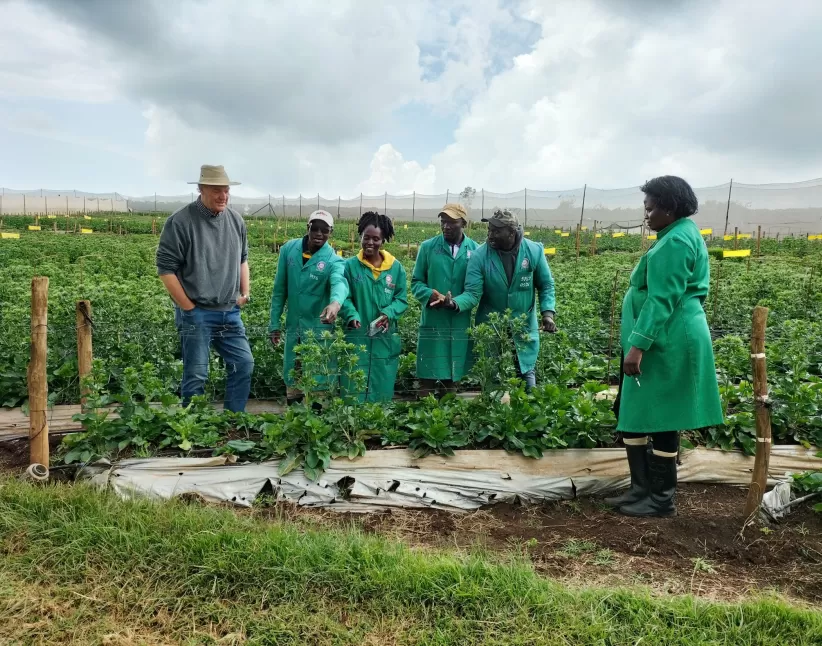
As our agronomist Bobby Sandeman puts it: “Matching crops to soil types and certain environments may sound basic, but it’s often overlooked.” Think about it this way; a desert cactus would not thrive in a tropical rainforest. It’s the same with our flowers. We understand where they naturally occur in nature and originate from, and then try and match our growing environments to what they are used to. This helps them to thrive naturally with less need for intervention. In Kenya, for example, we have 7 different farms with 7 different environments.
So we choose the right flower for the right environment and rotate crops to avoid soil depletion and pest build-up. Cover crops do more than fill space. They help hold the soil in place, improve soil structure, help retain water and create habitats for pollinators.
Organic matter and the magic of worm tea
What’s the secret to vibrant soil? Organic matter. On every Marginpar farm, we compost plant material to enrich the earth. But that’s not all, we’ve also introduced vermiculture units.
These units house worms that create “worm tea” (fondly nicknamed “jungle juice” by our team). Packed with beneficial bacteria and nutrients, it gives our soil a boost while cutting down on the need for synthetic fertilisers.

Better soil holds more water
Healthy soil doesn’t just grow better flowers; it also holds more water.
”For every 1% increase in organic matter, the soil holds an extra 150,000 litres of water per hectare.
Bobby explains: “That means less irrigation and better drought resistance." We believe in the principle of ‘measure, monitor, and manage’. Since 2018, we’ve increased stable soil organic matter by 25% on our Kenyan farms. That’s roughly 22 million litres of extra water retained in the soil. Enough to make a real difference during dry spells.

Looking ahead
“As the saying goes, it’s not about the destination, it’s about the journey,” says Bobby. “We’re proud of how far we’ve come, but even more focused on where we’re going next.”
Here’s where we’re putting our energy in the coming years:
1. Soil first
Soil is the foundation for everything we grow. We are working to further increase soil organic matter. Healthier soil doesn’t just hold more water, it also supports richer biology, and helps us reduce inputs. That means we can grow more with less.
2. Smarter crop protection
Our goal is to stop relying on chemicals altogether. We’re already using biological solutions across all our farms and follow an IPM (integrated pest management) strategy: prevent first, treat later and only if necessary. From natural predators to sticky traps and pheromone traps, we’re building a more natural balance into every step of the process.


3. Precision crop management
With better data on each specific crop, we’re fine-tuning nutrition per variety. The result? Less waste, fewer inputs, and flowers that grow stronger naturally. It’s about working smarter, not harder.
4. Knowledge at every level
True sustainability means everyone is on board. We invest time in training our teams: supervisors, team leaders, and value adders. So everyone understands the “why”, “how”, and “when” behind our practices. Because change happens when people own it.
Sustainable farming in practice
Each season brings new insights. Our goal isn’t just to grow flowers, but to do it in a way that supports the soil, the environment, and the people who depend on it. Regenerative farming helps us keep delivering, season after season, while protecting the land we rely on. The result? Flowers that perform beautifully, backed by thoughtful farming and long-term care.