rowing more responsibly involves choices in many areas. Soil health and water management are visible examples. But the characteristics of the plant itself also play an important part.
Together with our breeders, we look for plants that are naturally less susceptible to disease. In Hypericum, this means selecting for tolerance to rust.
Rust is a fungal disease. It spreads through tiny particles known as spores, which can be carried by wind, water droplets or contact with plants and equipment. When a spore lands on a plant
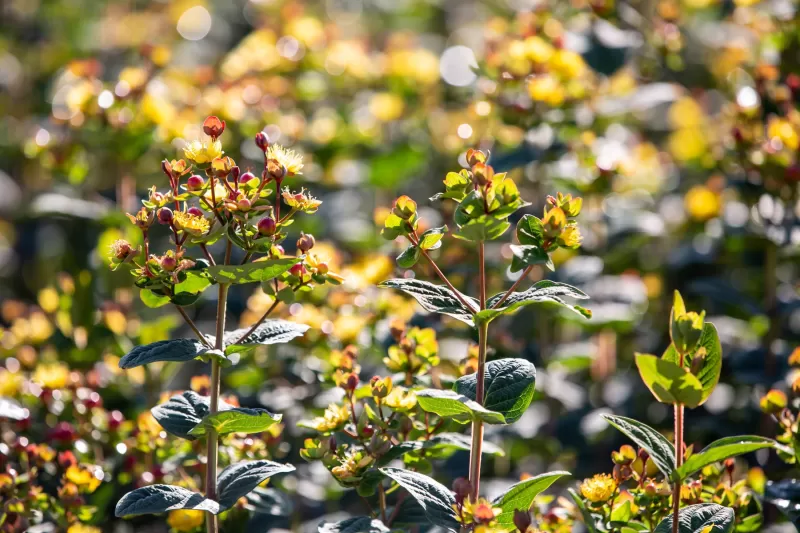
and conditions are favourable, the fungus can develop further. This shows up as reddish-brown marks on the leaves. Affected foliage can reduce quality, lead to crop losses and impacts sales value.
Rust is difficult to manage. The fungus can adapt, and there is no natural enemy that can be used reliably in the crop. Reducing the risk of infection over the long term therefore also means looking closely at the plant’s own characteristics.
Tolerance as a starting point
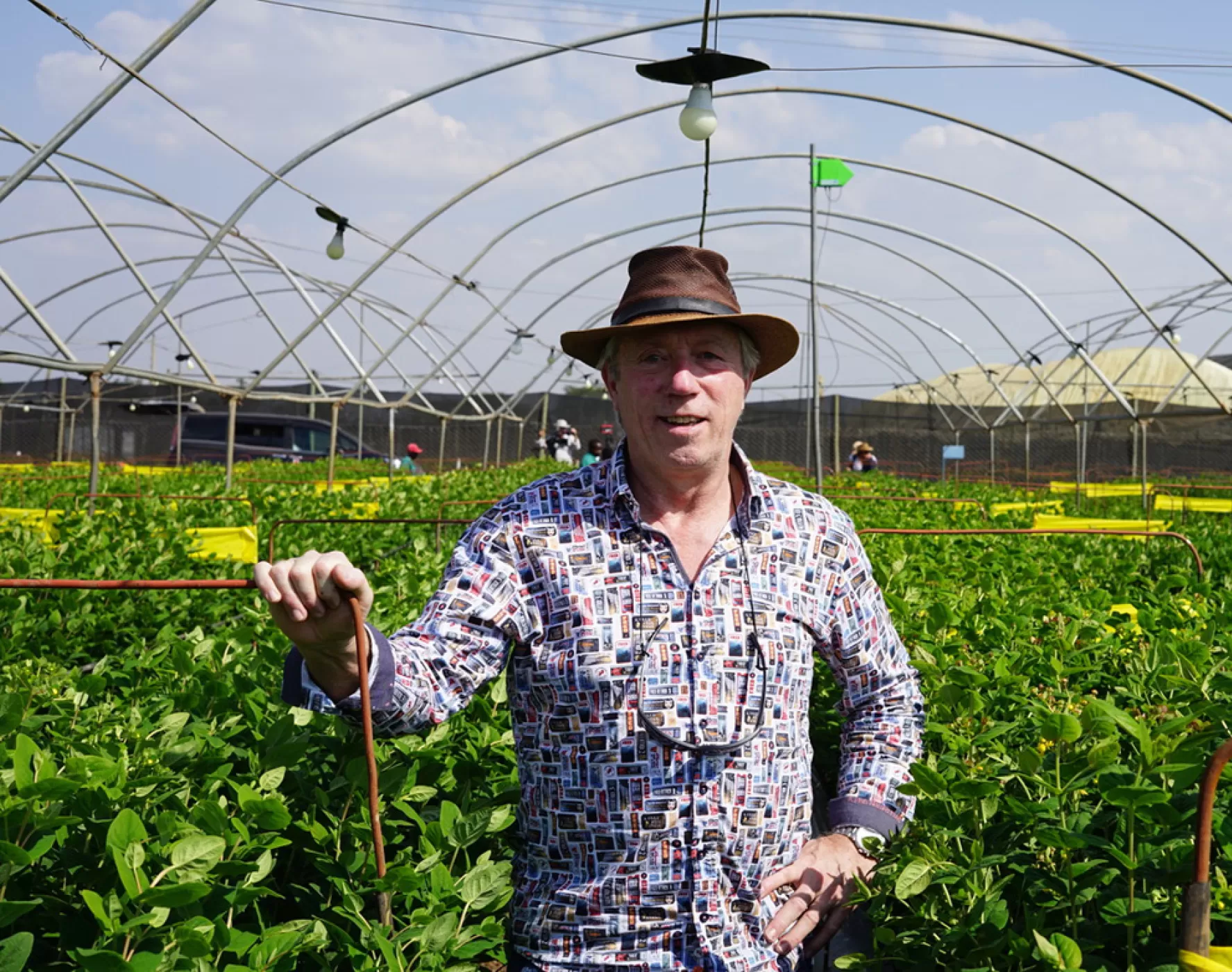
At our Hypericum breeder, H. & B.R. van den Bosch, rust has been an important selection criterion for many years. Our collaboration began in 1988 with Henk van den Bosch, when we introduced Hypericum to Africa. His son, Bernard van den Bosch, later took over the breeding work. Throughout that time, improving rust tolerance has remained a consistent focus.
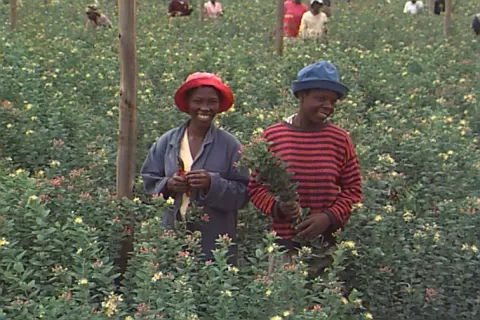

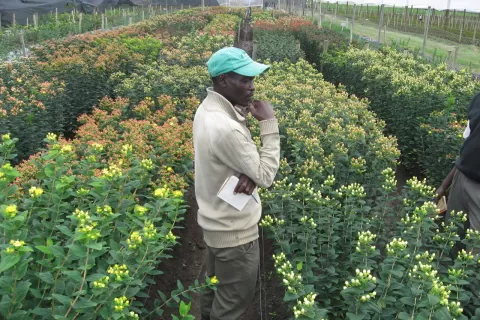
Bernard explains: “We select for rust tolerance, rather than resistance. Spores can still land on the leaf, but they are less likely to establish themselves and develop further. In practice, this means we see fewer affected leaves.”
Strict selection, with a clear effect on the farm
Around five years ago, a firm decision was made in the trial fields. All plants that proved susceptible to rust were removed. It was a rigorous approach, but the effect has been clear. The more tolerant plants that remained need considerably less treatment against rust.
Testing in Africa, under local growing conditions
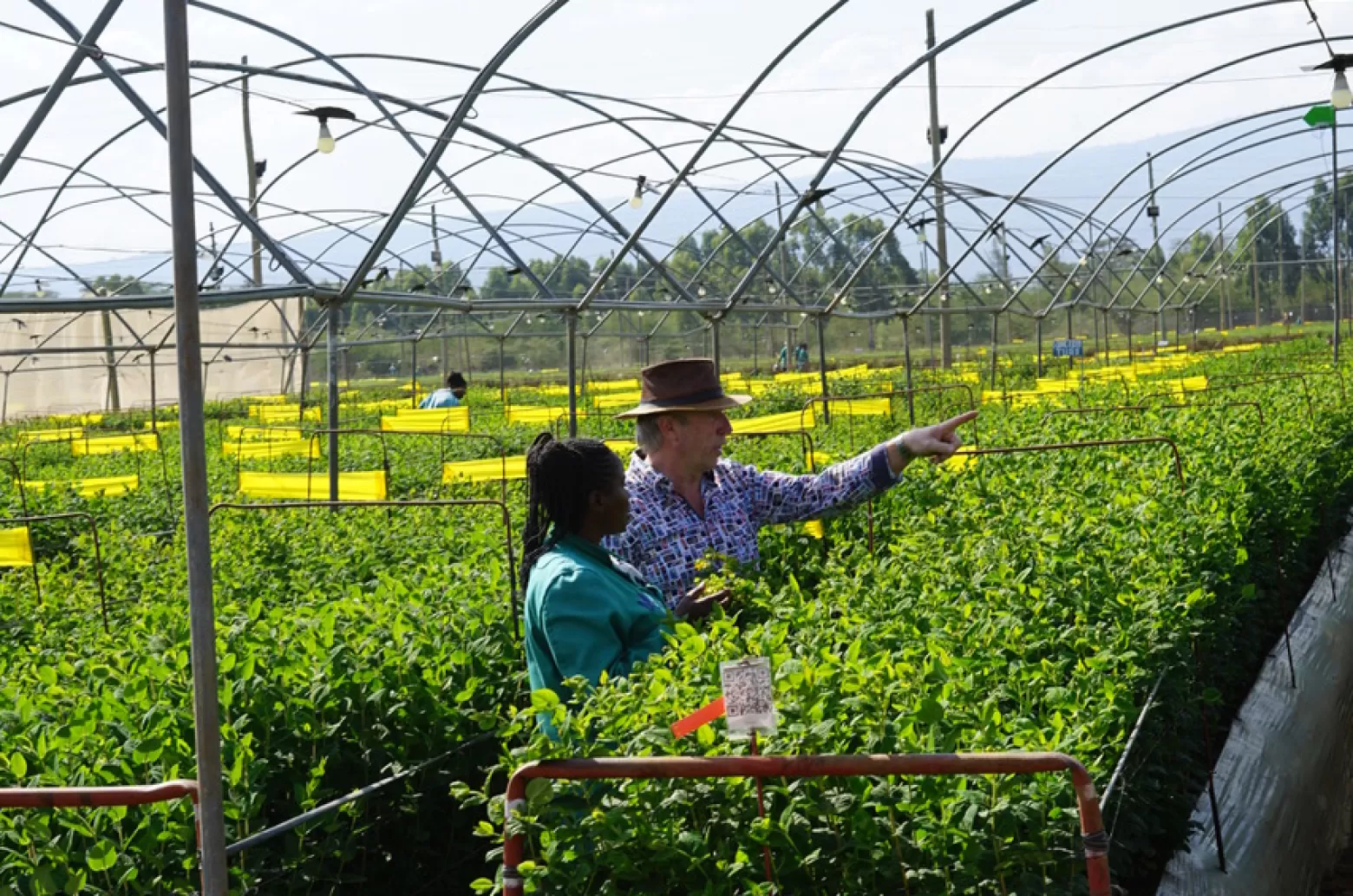
Bernard remains closely involved in the trials in Africa. Hypericum test fields are maintained across several of our flower farms, including Bondet, Naivasha and KS. Regular decisions are needed as plants develop and are assessed.
“I visit the trial fields several times a year and review the plants together with the team,” Bernard says. “Before deciding which lines will move forward, I want to see how they perform under local growing conditions.”
An ongoing point of attention
Despite the care and selection involved, rust remains a factor, also in more tolerant plants. Plant breeding does not remove the issue completely. It does, however, help us reduce reliance on treatments step by step.
This work takes patience, careful choices and long-term collaboration. That is where we see the value of breeding. Not as a quick fix, but as a way to make the crop more resilient over time.