Design with emotion
In part one of our visit to the European Floristry School in Sheffield, we joined Belgian floral designer Stefan van Berlo and discovered why a strong foundation, attention to detail and a little intuition can make all the difference in a design. Now it is time to step into the classroom next door.
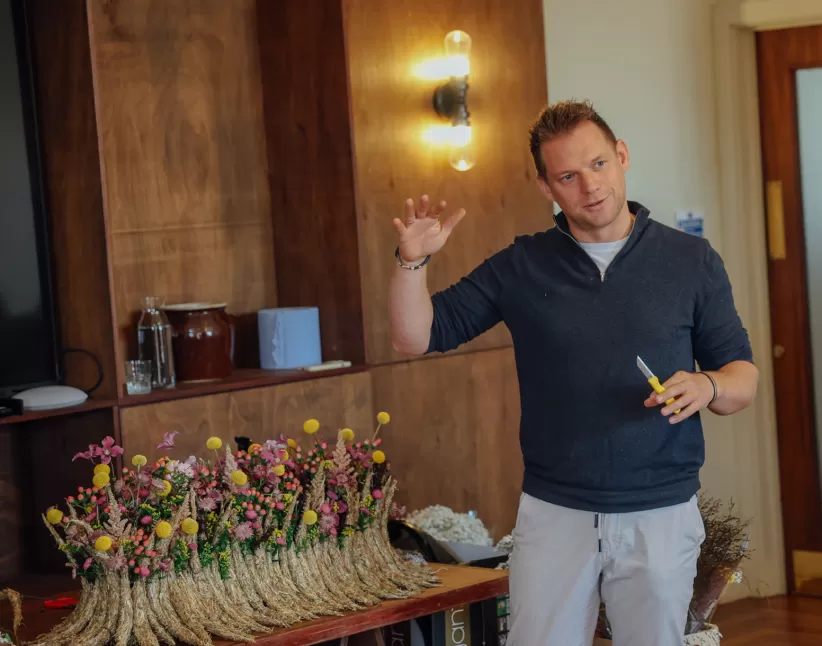
Spanish floral designer Daniel Santamaría has worked as a florist for 35 years and was trained early in his career by German master florist Gregor Lersch. That influence can still be seen in his technical approach today, although his work has very much developed its own Daniel Santamaría signature. Today, he travels the world as a freelance designer and teacher, sharing his knowledge with florists across Europe, South America and Asia.
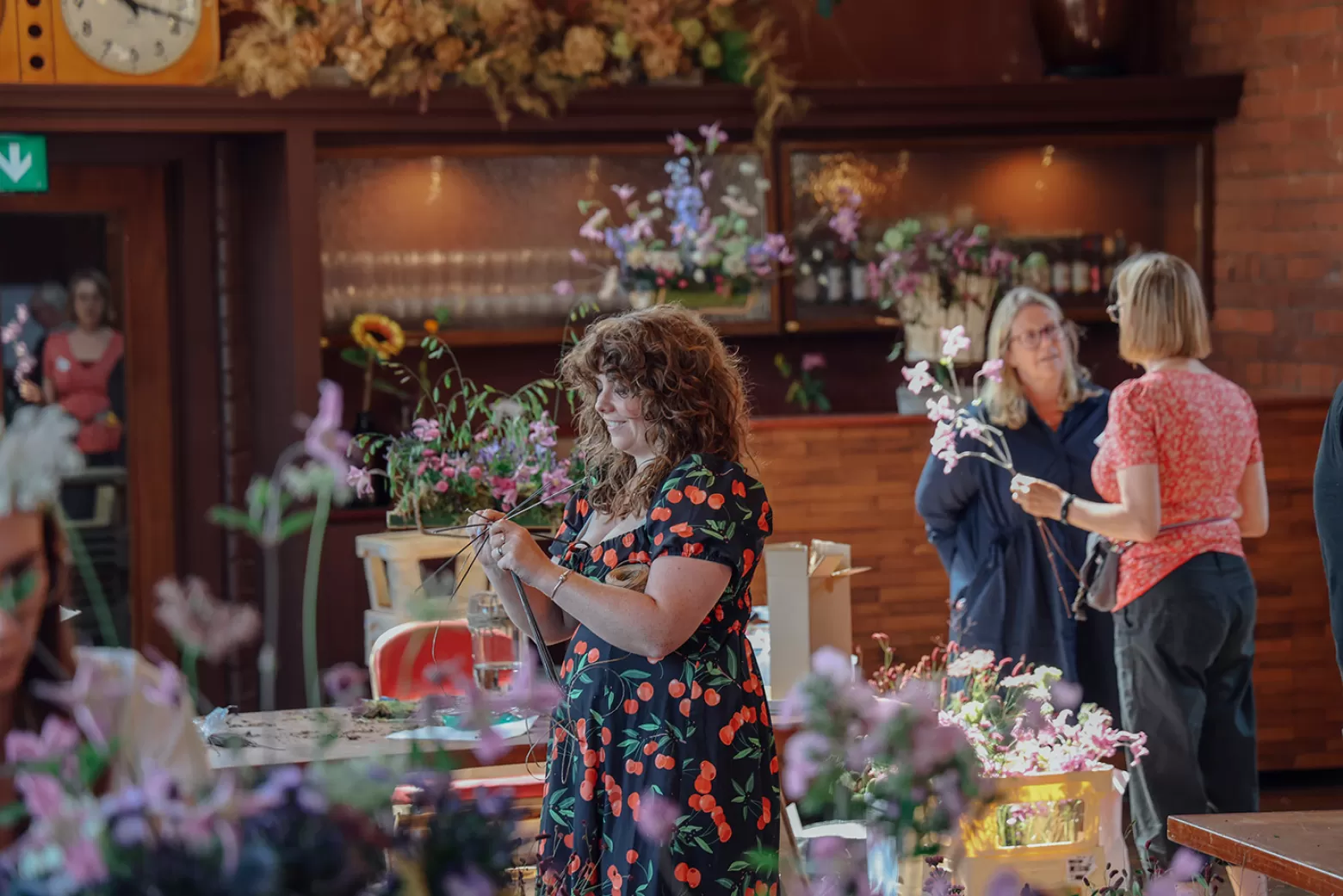
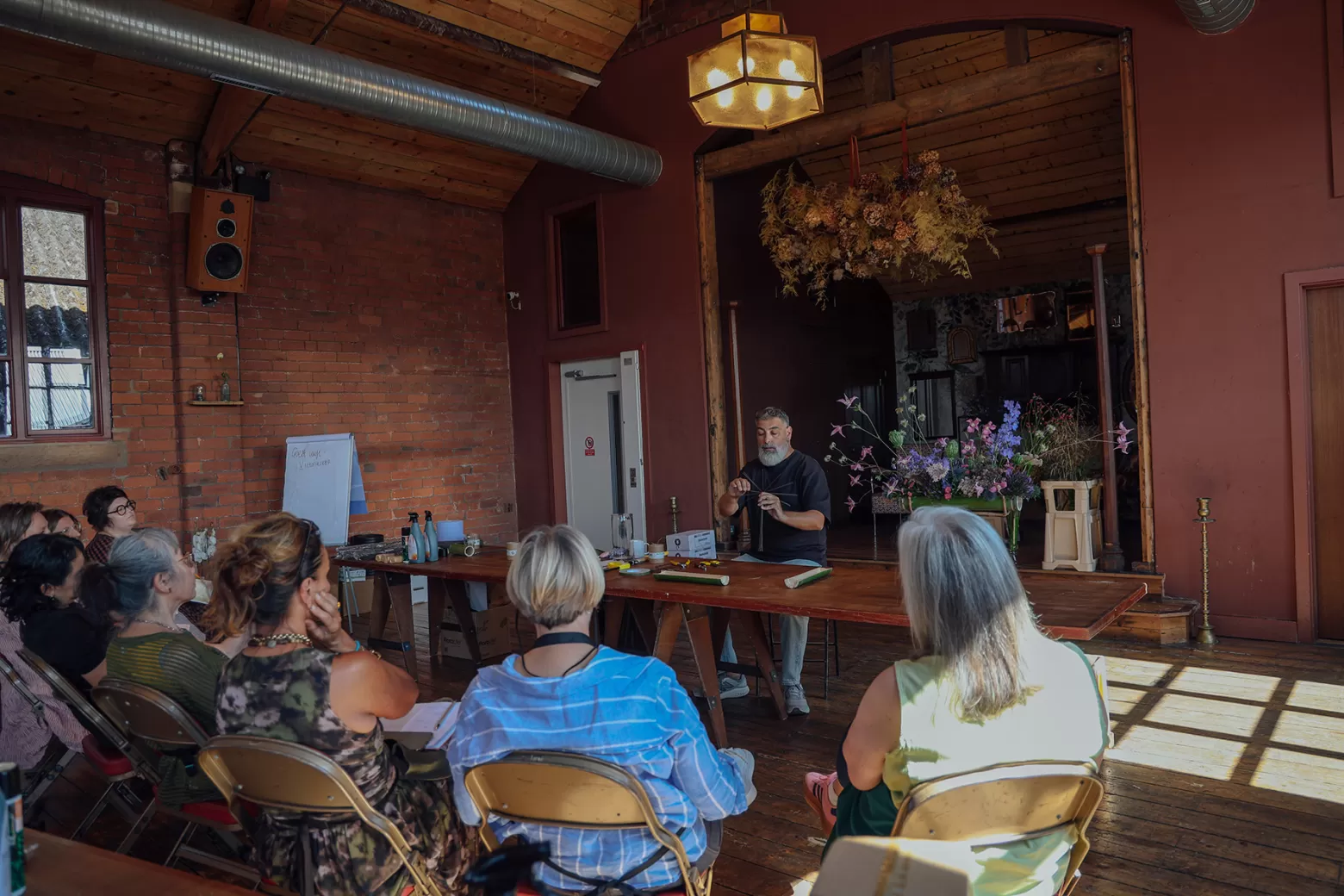
And one thing quickly becomes clear during his lesson: he enjoys it. There is plenty of laughter in the room as Daniel combines teaching with stories from decades of floristry and competitions. His approach is technical, thoughtful and full of experience, but never rigid. During his masterclass, one idea keeps returning: design should have emotion. From standing bouquets and parallel arranging to the importance of negative space, here are some of the lessons we took away from Daniel’s class.
Rediscovering the standing bouquet
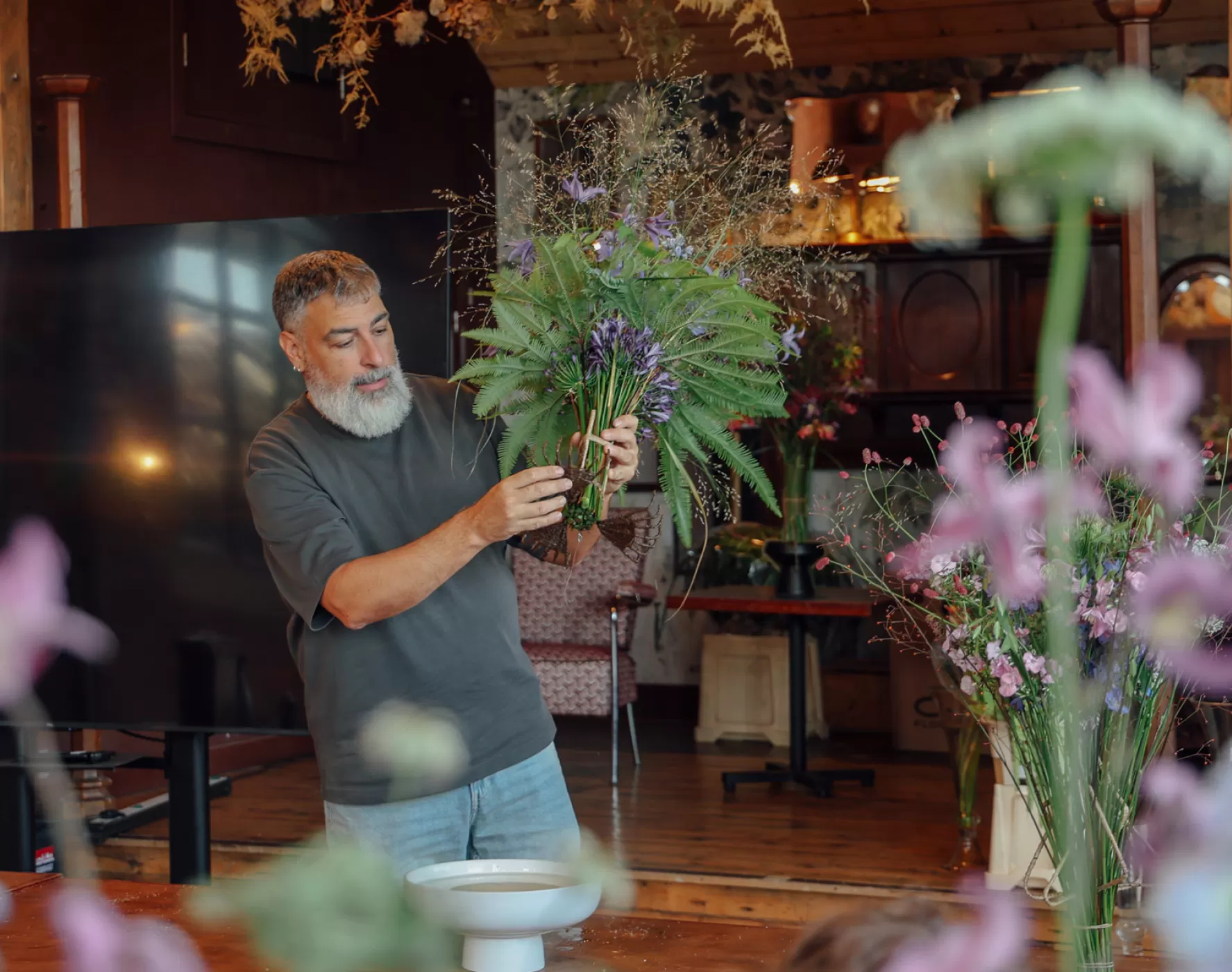
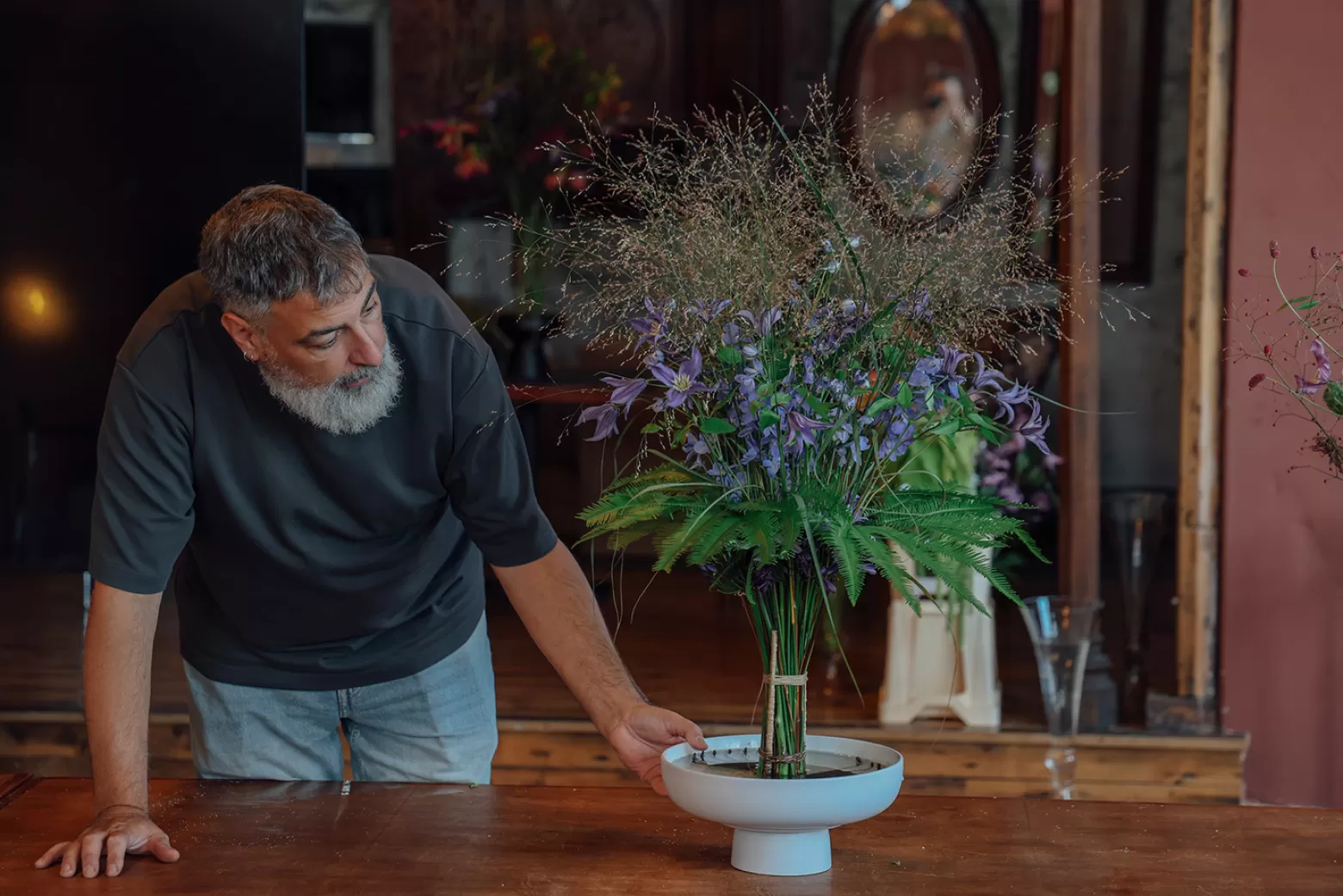
One of Daniel’s subjects is the standing bouquet: a bouquet built on a frame which can stand independently in a shallow container of water. The technique dates back to the 1990s, when Gregor Lersch began developing this type of bouquet. Daniel shows an example built around shades of blue and green. Dark Agapanthus Eyfori Blue creates visual weight at the bottom. Above it is a collar of ferns, followed by a lighter blue layer of Clematis Amazing© Oslo and Delphinium Bella Andes Azure. Almost transparent Panicum Warrior finishes the top.
There is a clear journey for the eye. First towards the dark Agapanthus, then upwards through the next layer of blue flowers. One student comments that it is a shame customers often have no idea what is possible with flowers. Daniel has a clear answer. “People aren’t stupid. They simply don’t know. It is our job as florists to show them what is possible and teach them.”
Parallel over spiral
Given the choice, Daniel prefers arranging flowers in parallel rather than using a spiral technique.
As he talks, he holds the base of the design in one hand, turns the frame and adds stems seemingly without effort. For a parallel design, he has one very specific rule: bind it at exactly two points at the bottom. No more. No less. Even the construction underneath the flowers has a visual relationship with the finished shape. When a student asks why the wire ends form a pyramid, Daniel points out that this shape connects with the structure above. The angled lines of the bouquet form an inverted pyramid. Everything relates to everything else.
Emotion over mathematics
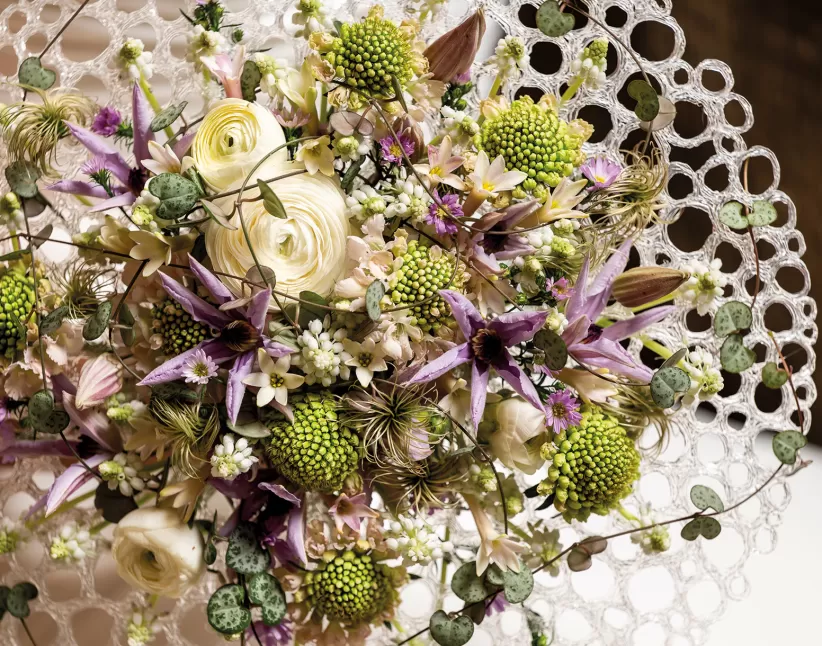
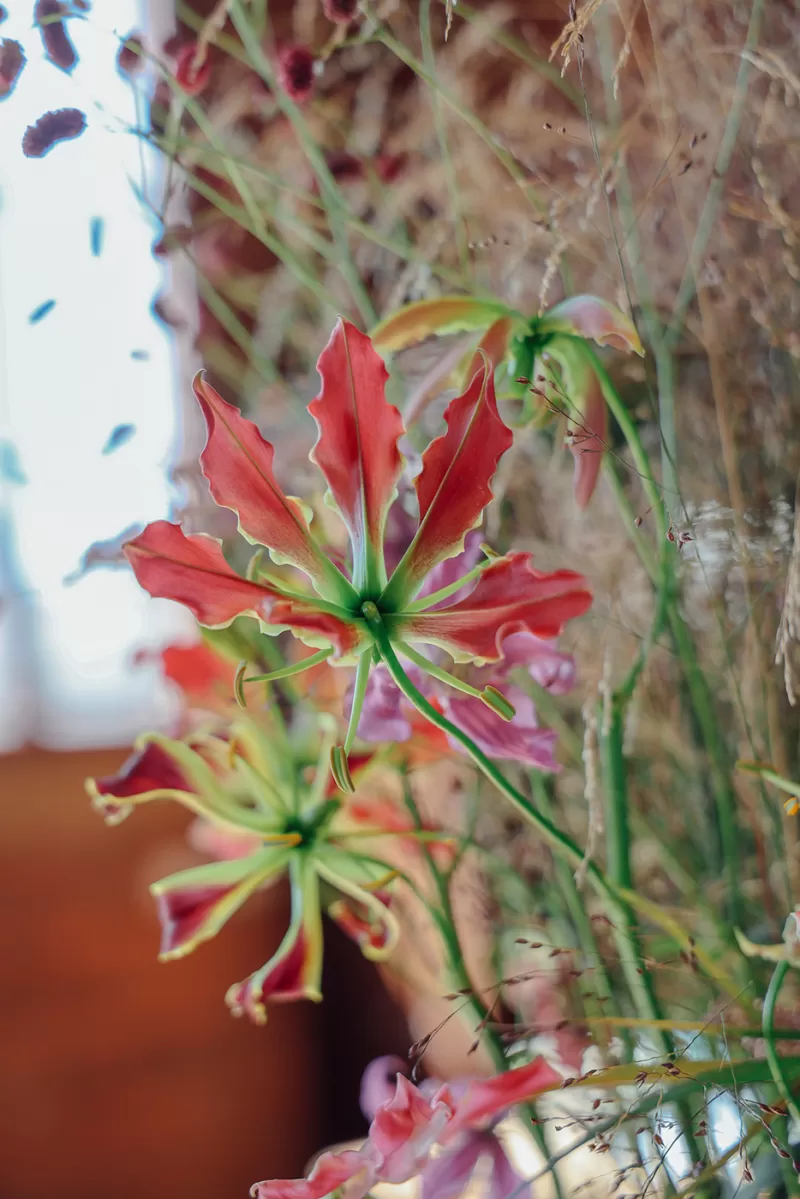
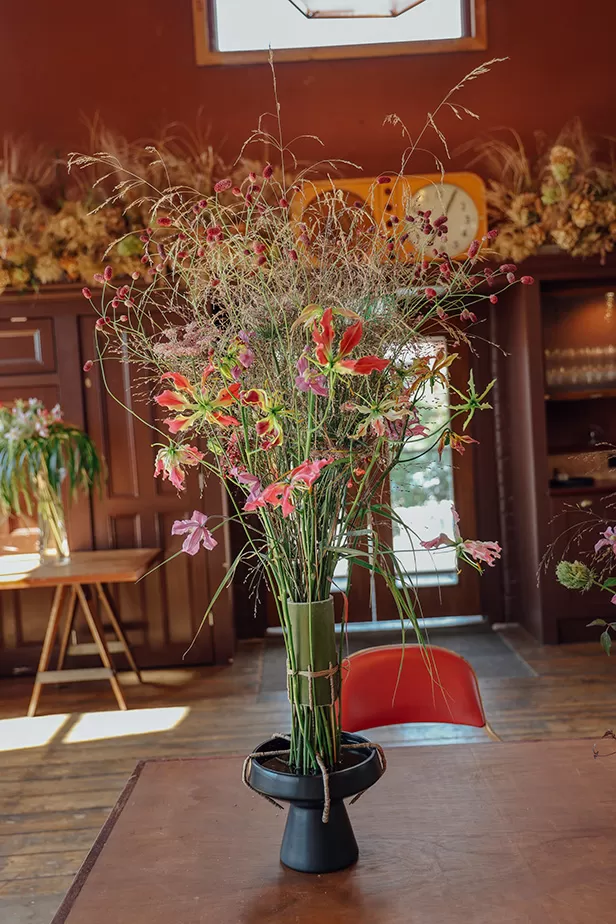
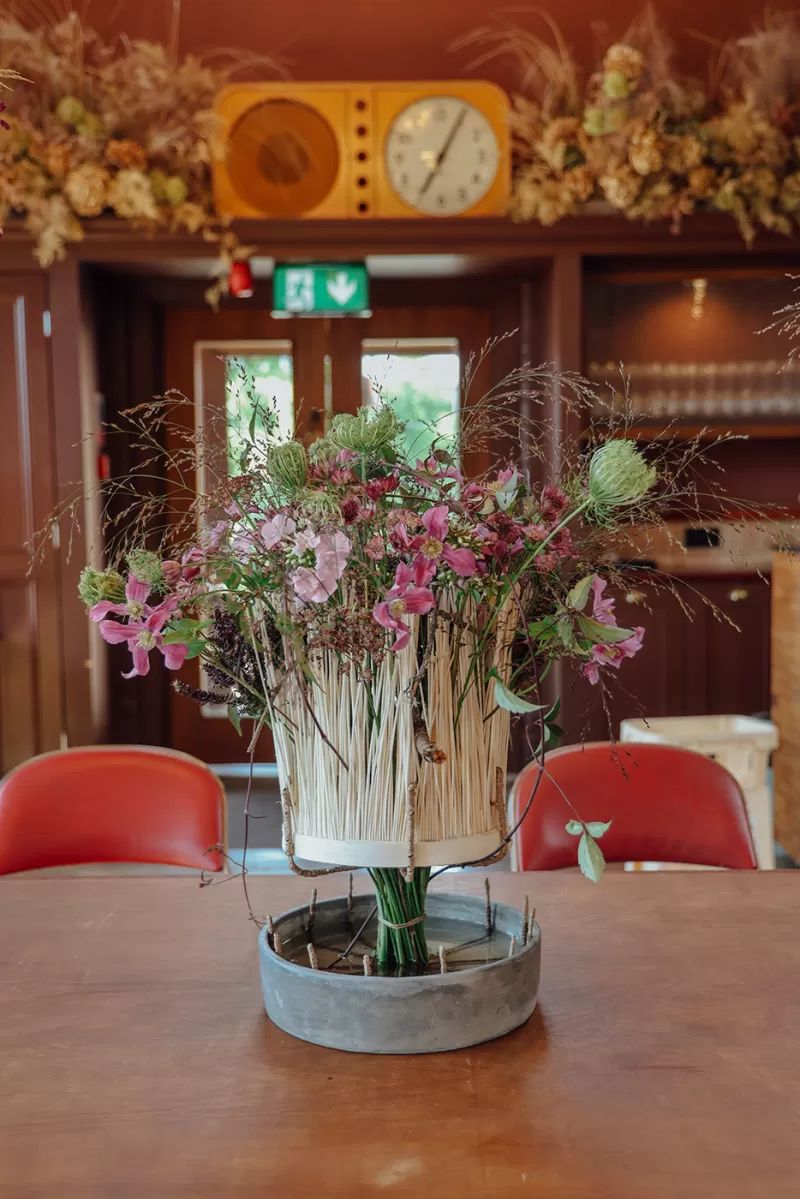
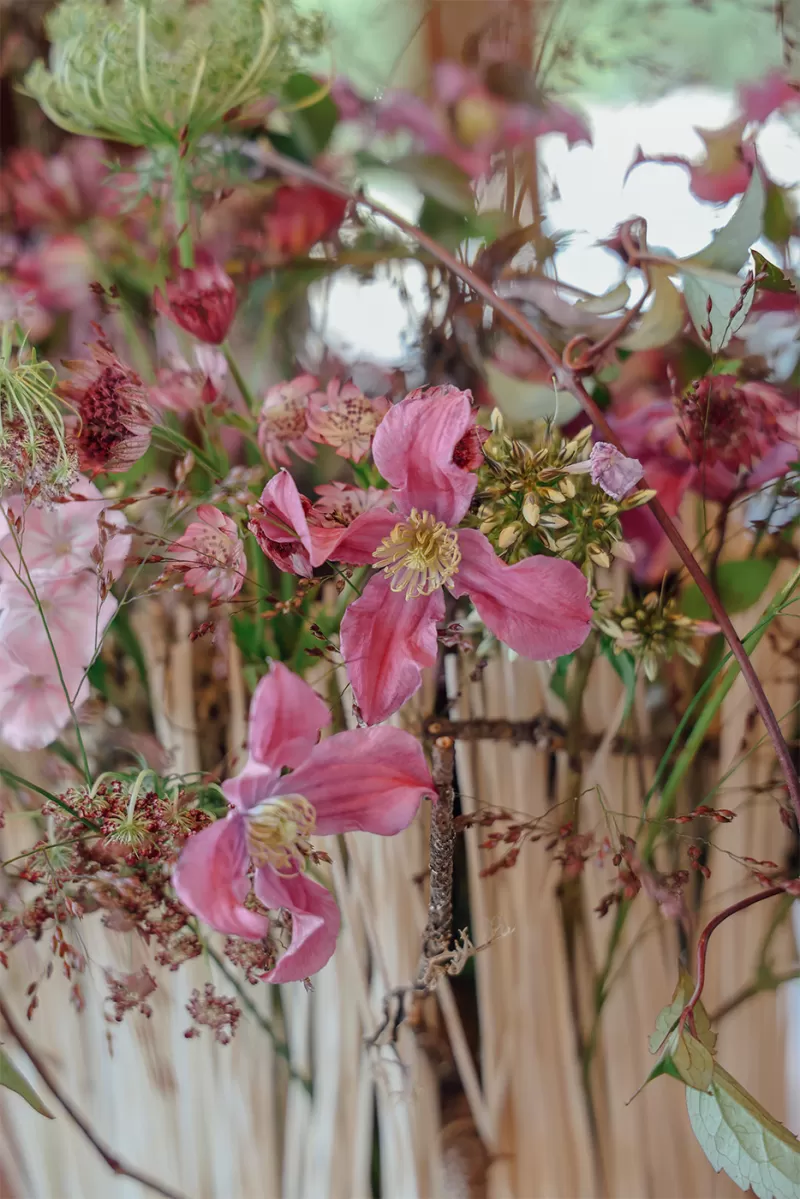
In another structure, Daniel begins adding flowers in shades of pink and red: Astrantia Roma©, Clematis Amazing© Kyiv, Daucus Carota 'Dara', Phlox Pink Eyes and Panicum Warrior. His advice to the students is simple. Sit down. Cut each flower individually. Place them at different heights. Why? Because variation creates emotion. Putting every flower at exactly the same height can make a design feel calculated, almost mathematical. The choice of technique should also match the purpose of the arrangement. A design that needs to last in a customer’s home for a full week requires different choices from a piece created for a two-day event.
Holding a Clematis stem, Daniel explains why he often removes foliage. He likes to see the line of the stem. Too much leaf can make an arrangement appear messy and distract from what he wants people to look at: the flowers.
The power of empty space
Many of the florists in Daniel’s class run flower shops, so the conversation naturally turns towards customers. And customers do not always share a florist’s vision. Daniel talks about Spanish customers asking for large, full bouquets with Lilies, Chrysanthemums and Sunflowers. He contrasts this with one of his own favourite designs: carefully positioned flowers surrounded by deliberate negative space.
That empty space is not always understood. Couldn’t you just put a few more flowers in there? For Daniel, the answer is no. The empty areas belong to the composition just as much as the flowers do.
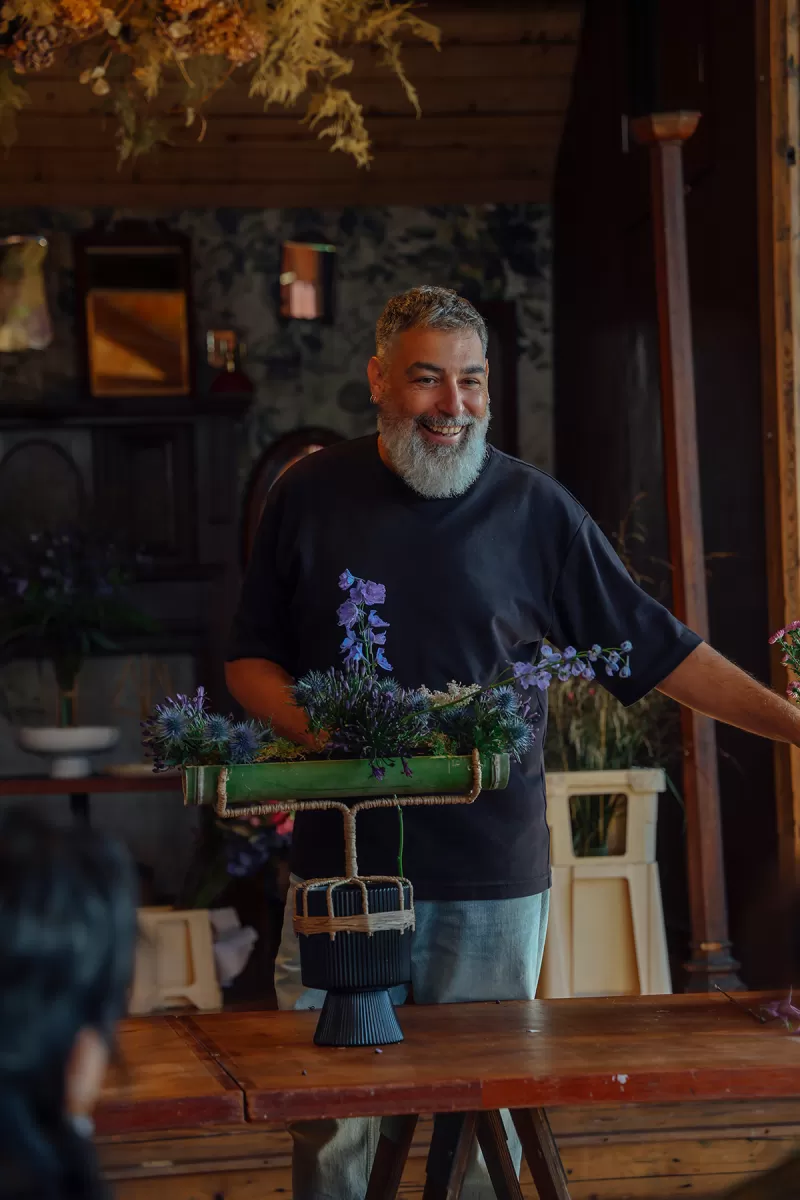
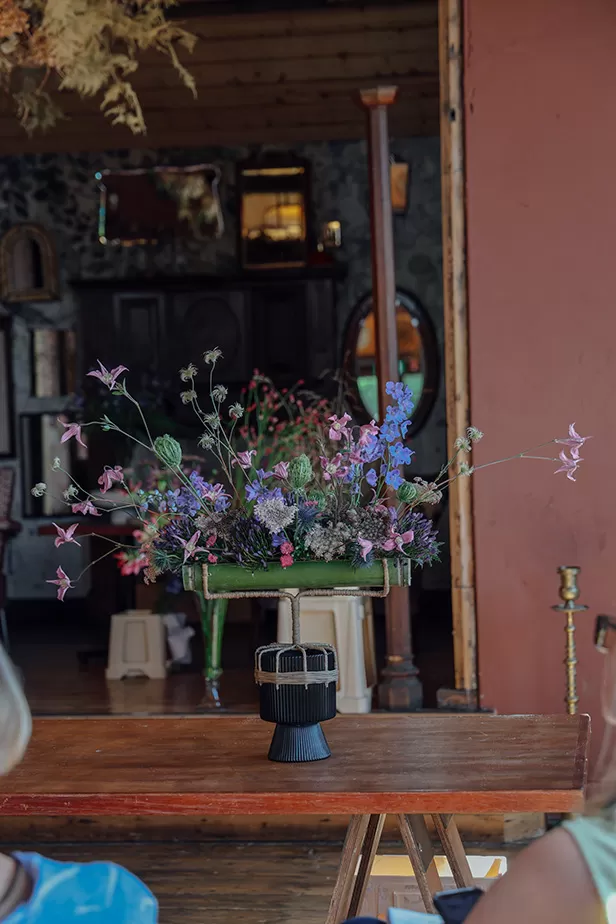
This idea returns in the students’ next assignment: a standing wire frame positioned over a vase, with bamboo containers holding the flowers. The dimensions are square, the piece should be as wide as it is tall, including the vase, and it needs to work from every angle. Daniel begins with Eryngium Magnetar Questar©, Agapanthus Eyfori Blue and Aster Flash to create structure, followed by Daucus Carota 'Dara', Delphinium Bella Andes Azure and Clematis Amazing© Rome. Rather than forcing flowers into predetermined positions, he looks at their natural shapes and lets their stems create lines through the arrangement. “I look at the natural form of the flowers. I respect how nature works.” Between the different groups of flowers, he deliberately leaves space.
Here.
Here.
And here.
Nothing has been forgotten. The emptiness is part of the design.
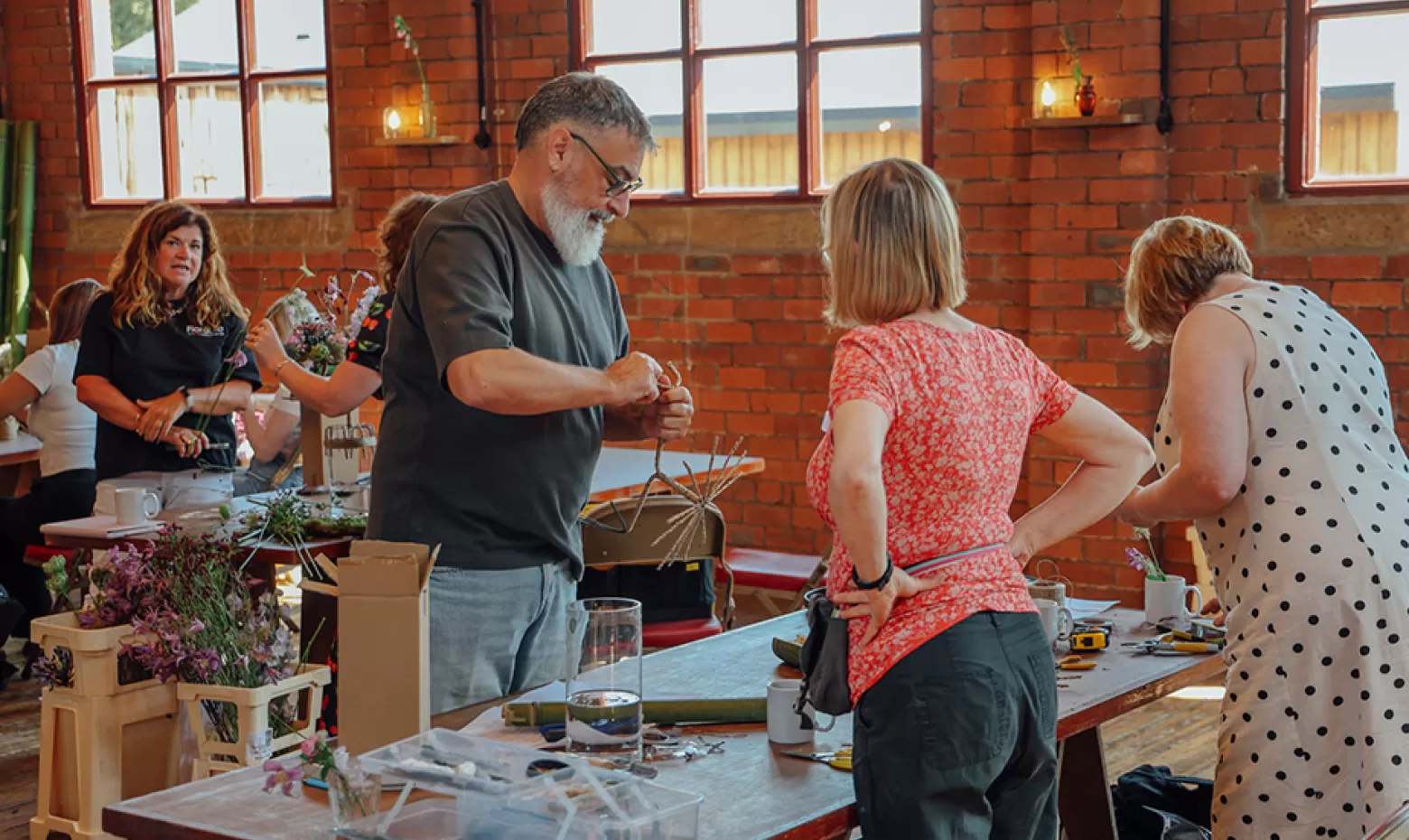
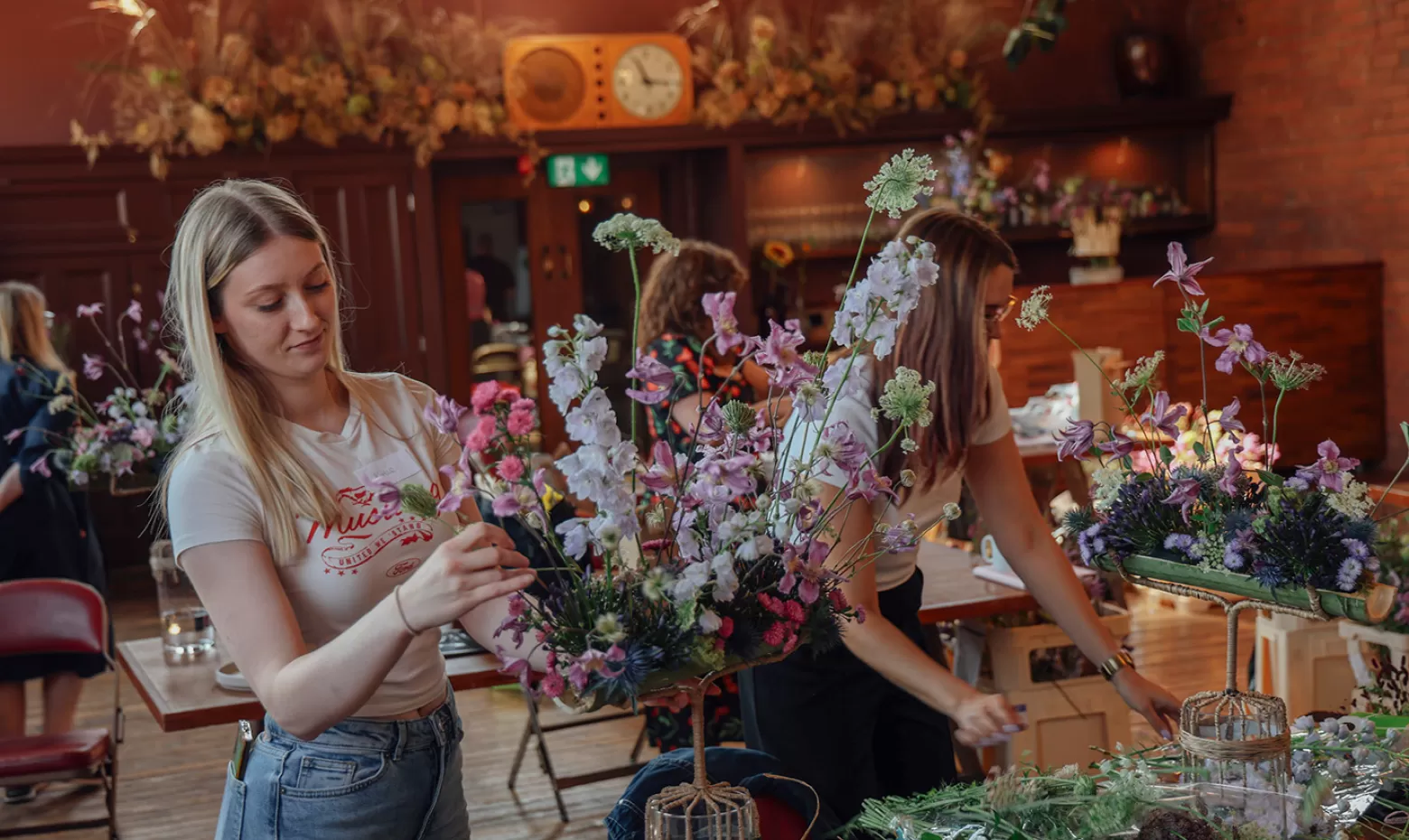
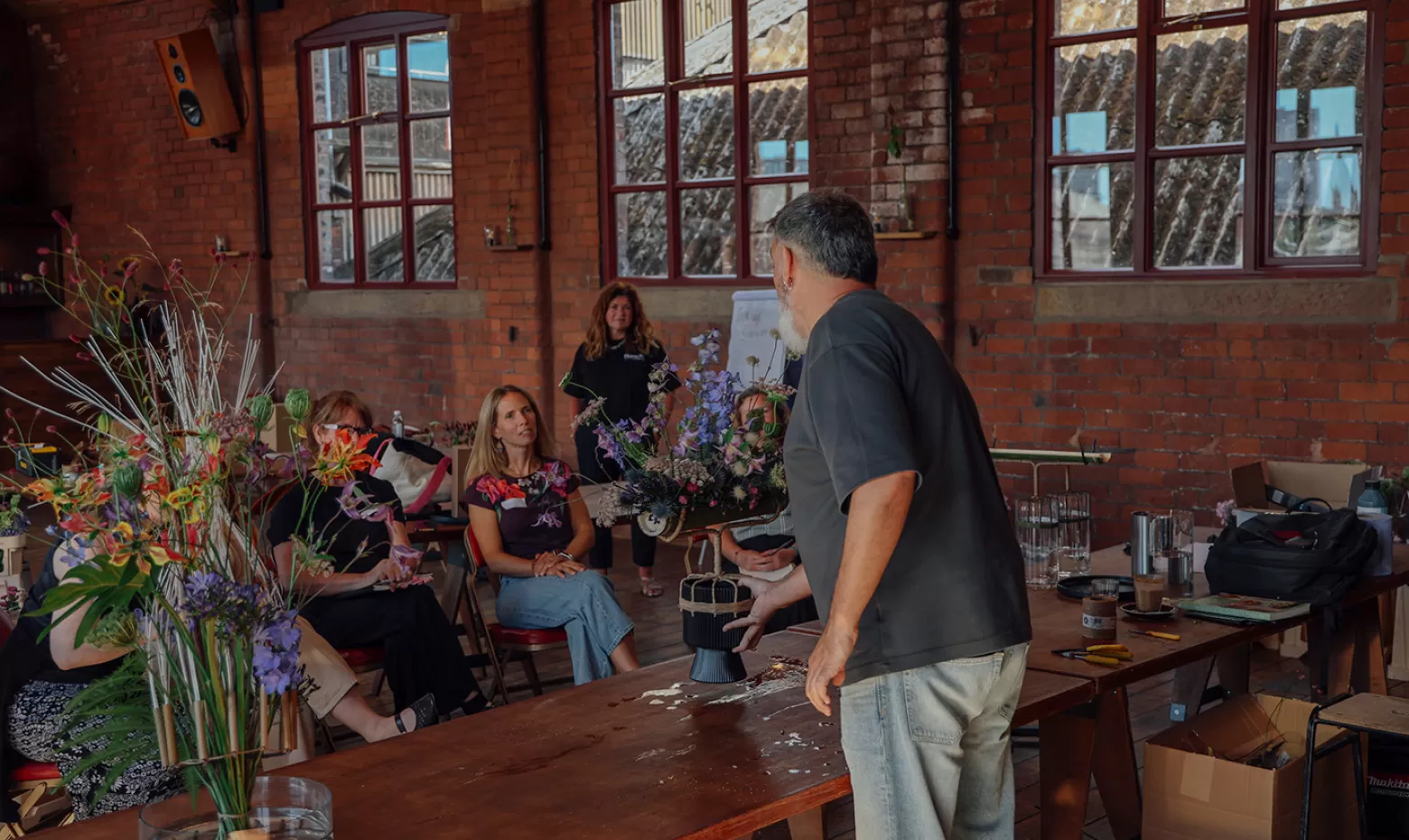
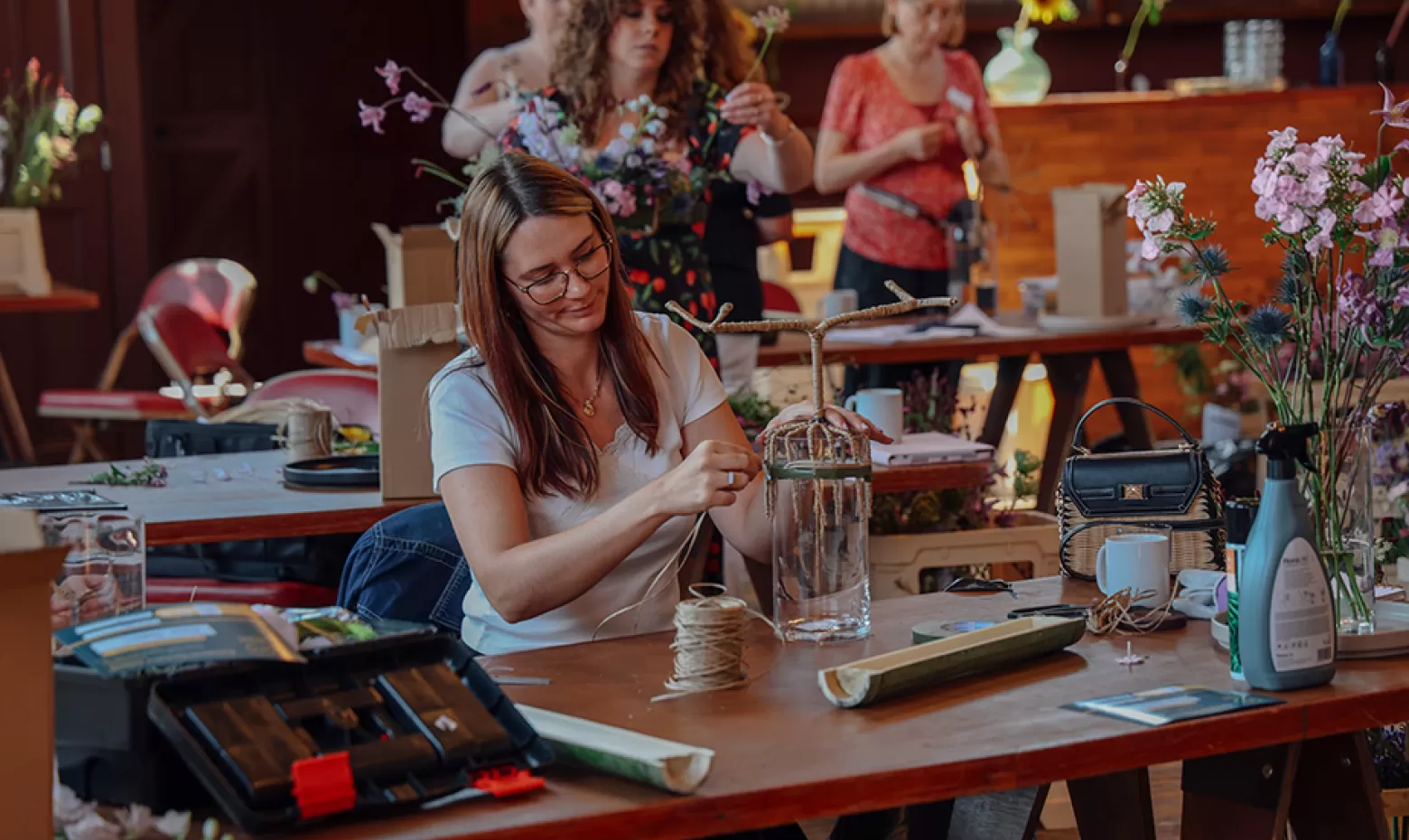
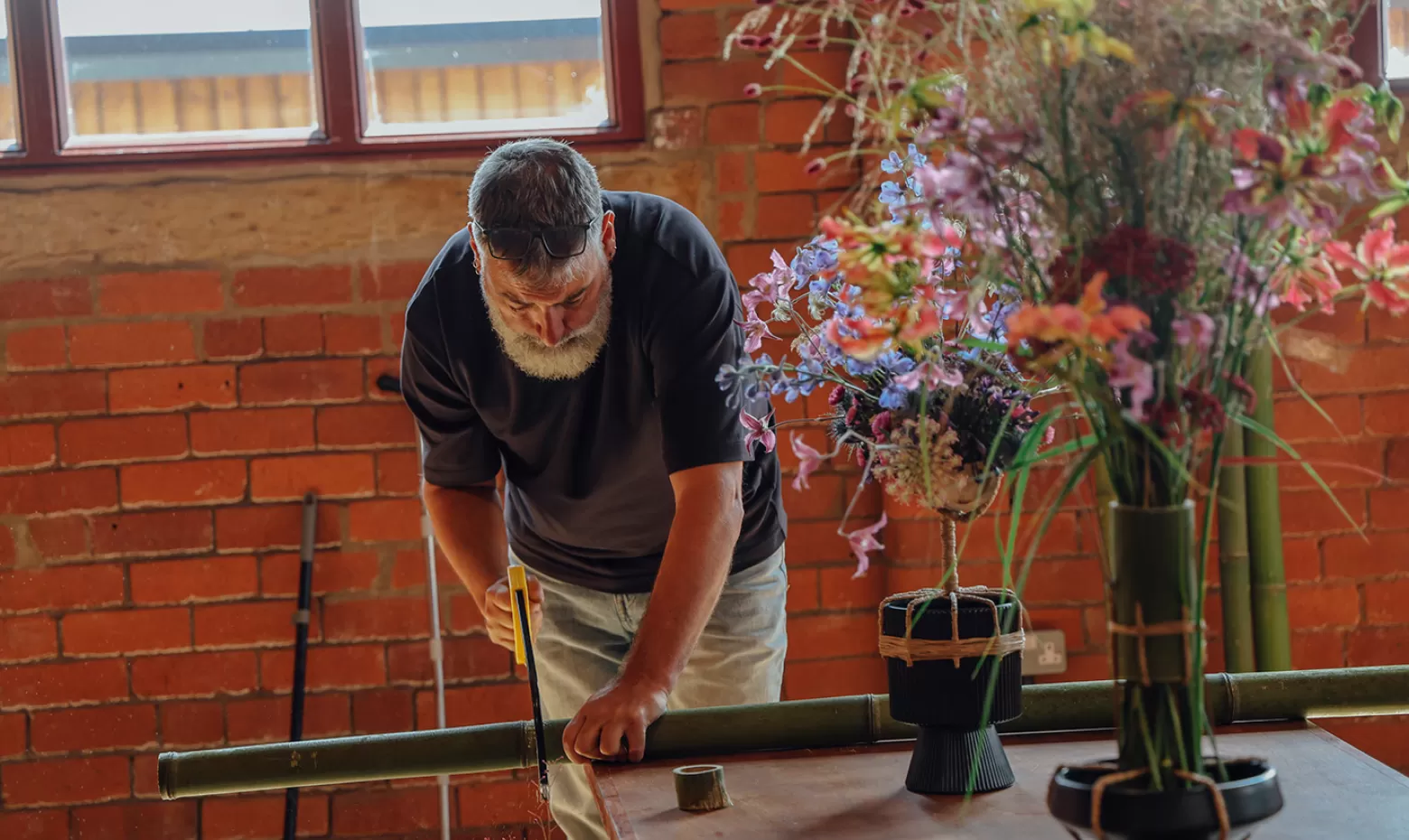
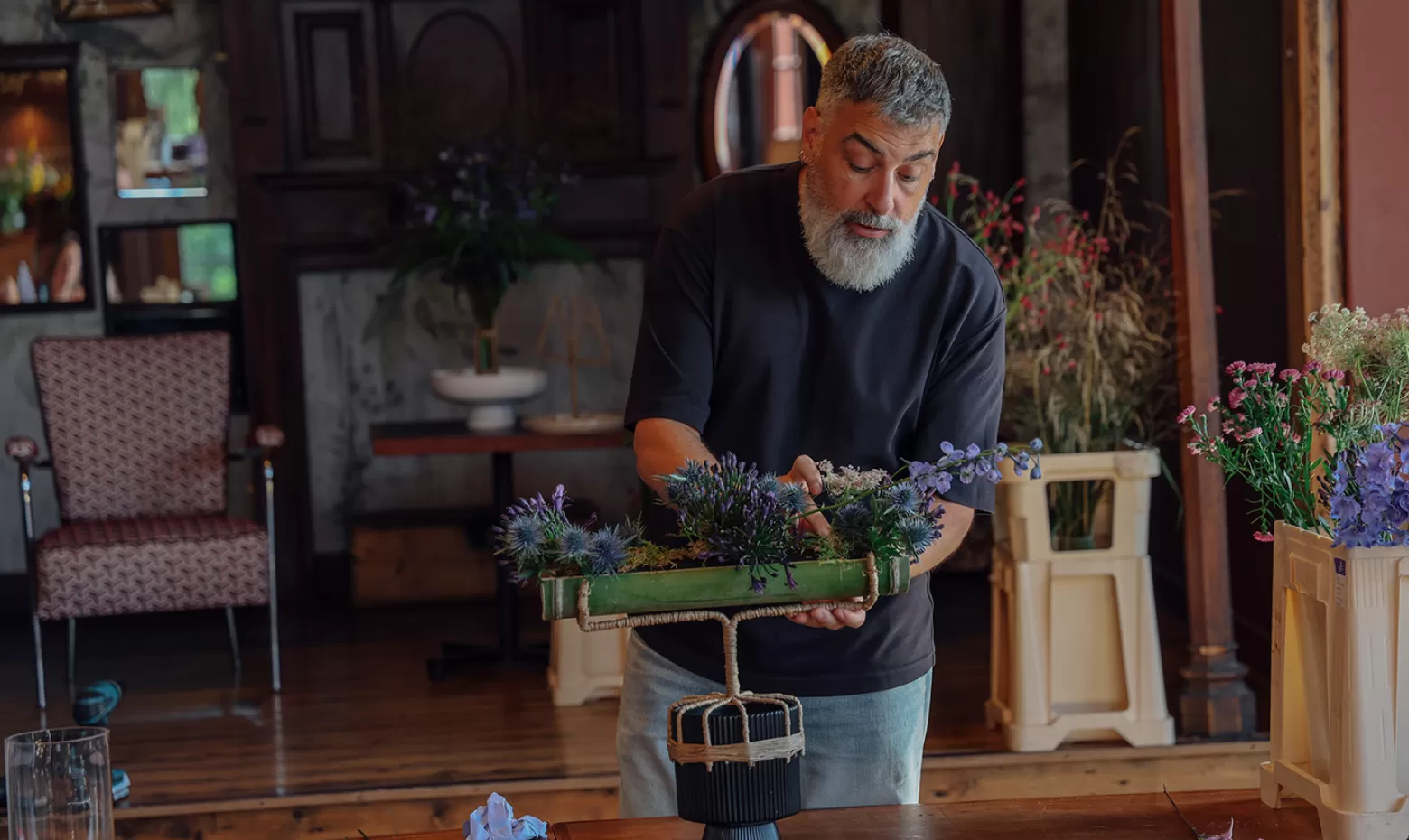
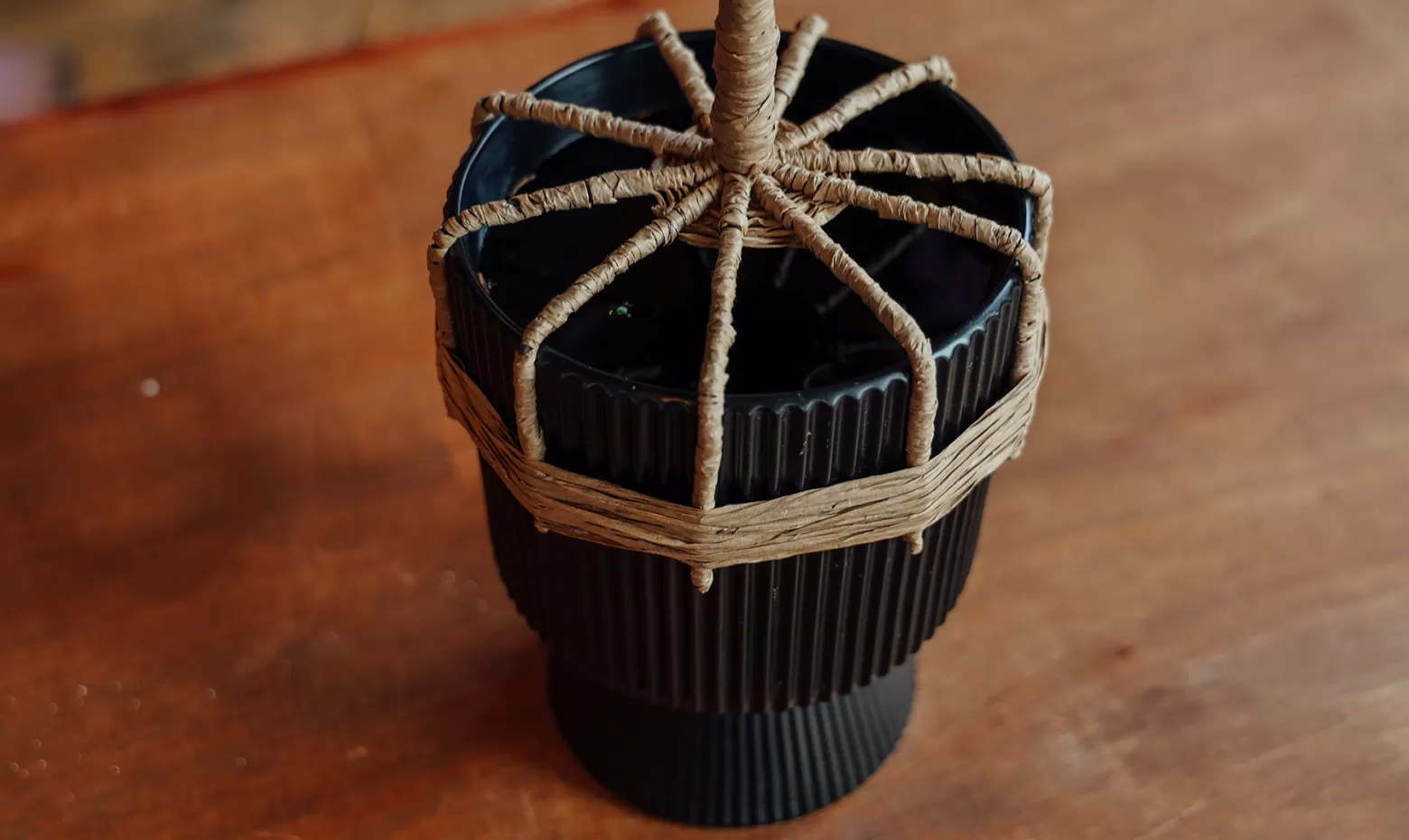
Use the arrows to view more behind the scenes photos.
Different designers, one important lesson
Stefan and Daniel have very different signatures, techniques and ways of working. Yet, after listening to both of them, there is a clear thread running through their lessons.
Good floristry is not simply about adding more flowers. It is about making choices.
Knowing when a flower contributes something to a design, even if it is not your personal favourite. Understanding structure before you start decorating it. Looking at colour, repetition, texture, lines and empty space. Developing your technique, while leaving room for intuition. And perhaps most importantly: continuing to experiment. Because even after decades in the profession, there is always another flower to look at differently, another technique to try and another design to discover.
Floral design: Daniel Santamaría
Photography: Joe Horner
Courtesy of the British Florist Association
Special thanks to Duyvenvoorde for taking care of the floral transport