Lessons from two masters
Marginpar flowers find their way into the hands of florists all over the world. We regularly see the results on social media: from intricate competition work to wedding flowers, installations and everyday designs. But seeing how an experienced designer actually works with those flowers is something else entirely.
When the British Florist Association invited us to support the European Floristry School in Sheffield, UK, we were very happy to say yes. Florists came together to learn from two leading European designers: Belgian floral designer Stefan van Berlo and Spanish designer Daniel Santamaría. And as an added bonus, our own team was able to sit in on their masterclasses. So, naturally, we took notes.
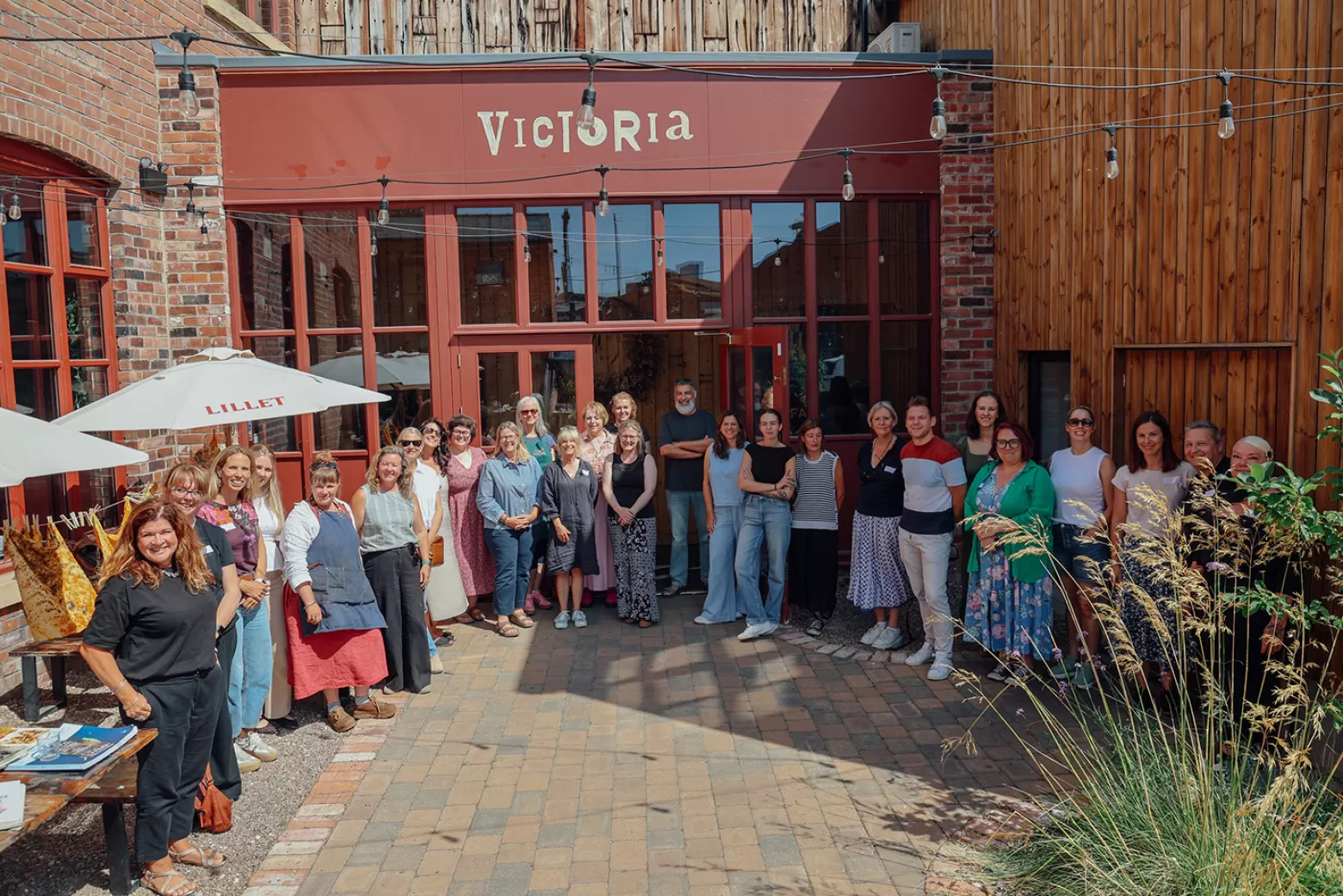
There was far too much to fit into one story, so we are splitting our lessons from Sheffield into two parts. In this first article, we join Stefan van Berlo and discover his approach to colour, structure, technique and trusting your instinct.
In part two, we step into Daniel Santamaría’s classroom to explore standing bouquets, parallel design, negative space and why emotion should sometimes win over mathematics.
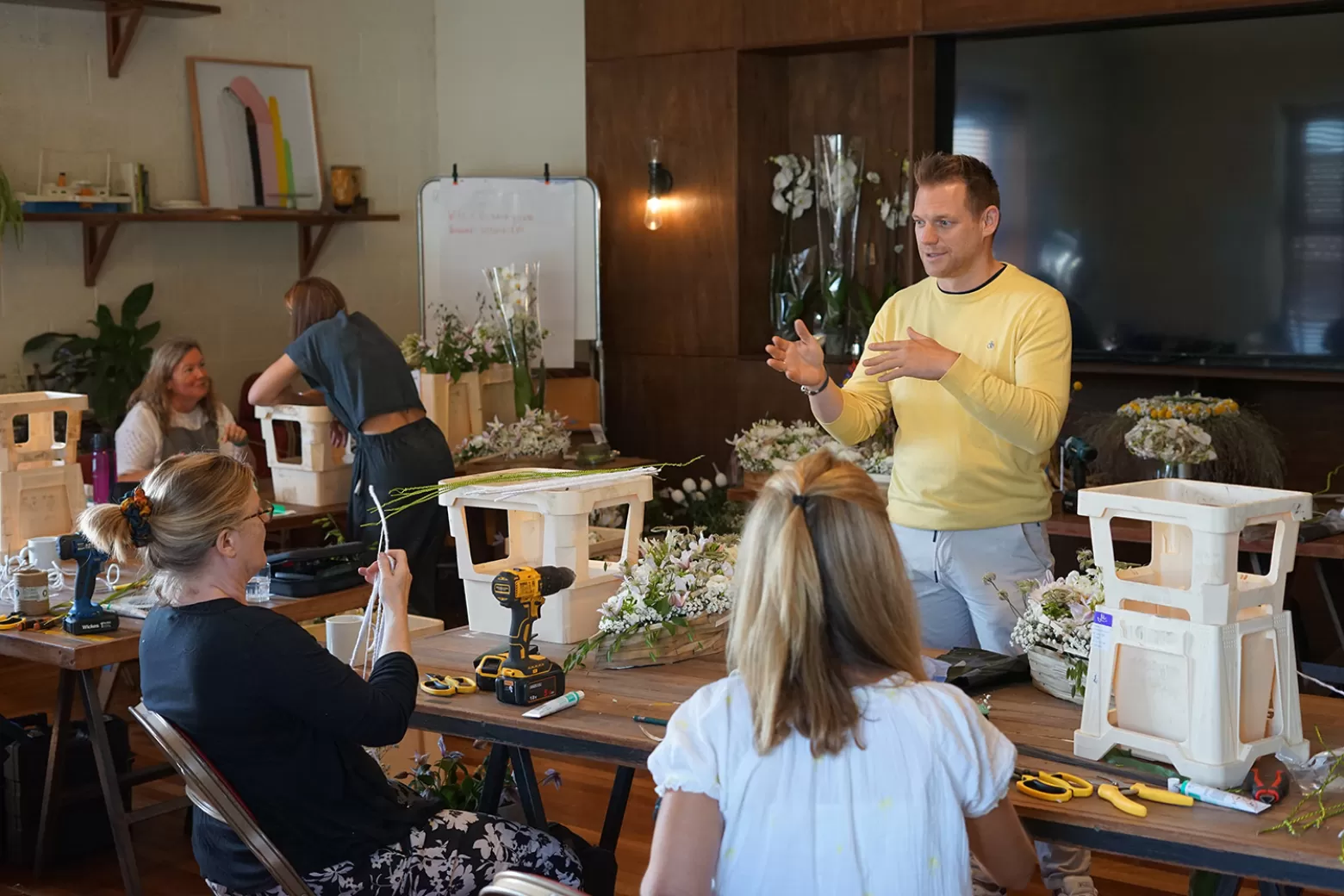
Stefan van Berlo: let go of your limitations
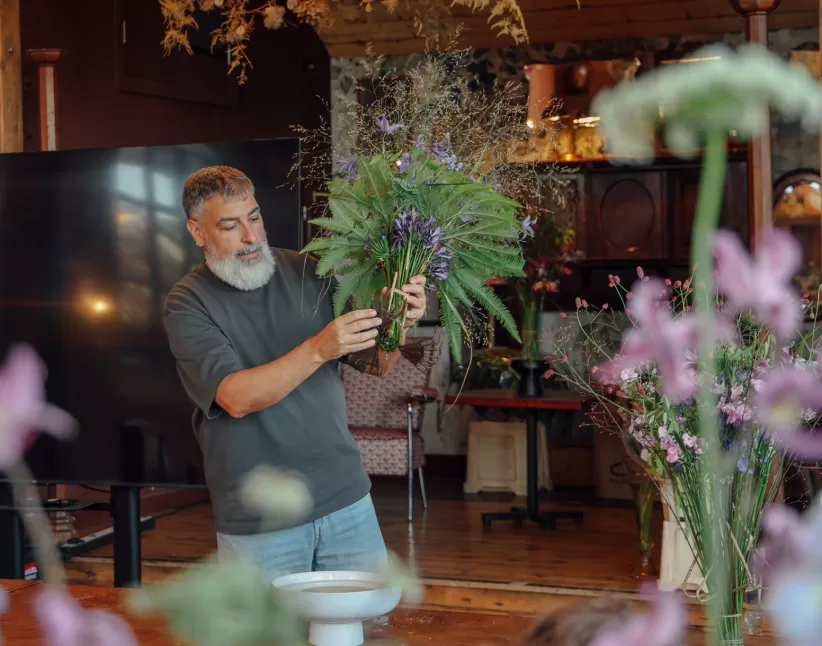
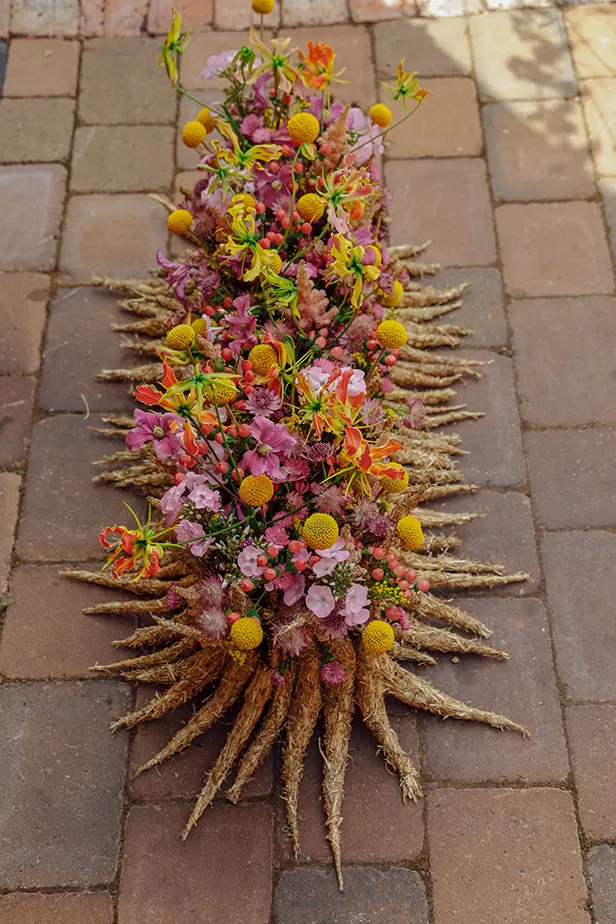
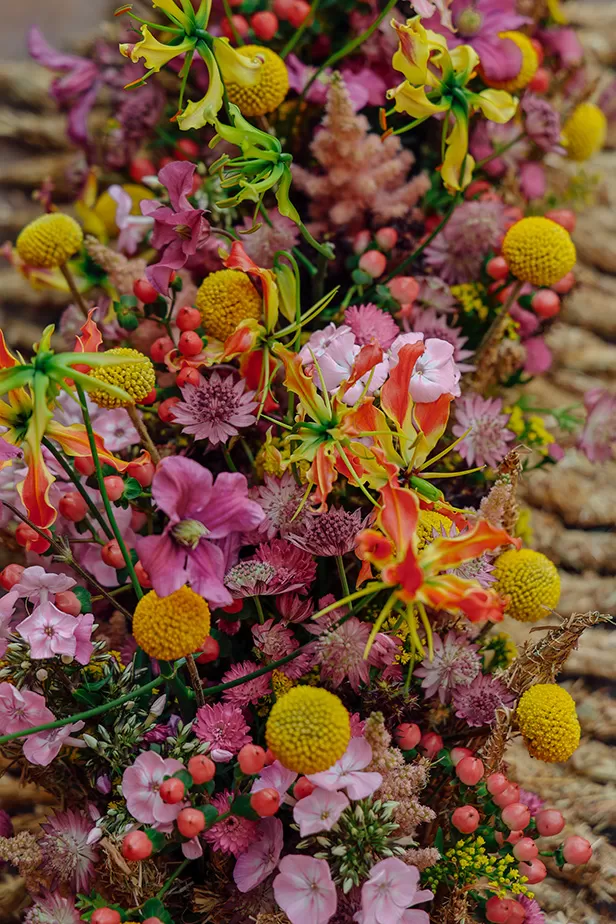
Belgian floral designer Stefan van Berlo travels the world sharing his knowledge, creating installations and competing at the highest level. He has won numerous competitions, including the Belgian national championship twice. When we enter his masterclass, the room is quiet. Everyone is watching closely as Stefan talks about colour, technique and the decisions behind his designs. Colour, he explains, can create depth and rhythm. Repeating the tones of Gloriosa and Hypericum Sisu Flirt throughout a design connects different areas and guides the eye.
One flower in particular plays an unexpected role in his first piece: Solidago. “I hated yellow!” Stefan laughs. But working with flowers you would not naturally choose is important, particularly for competition florists. Avoiding certain flowers or colours only creates limits for yourself.
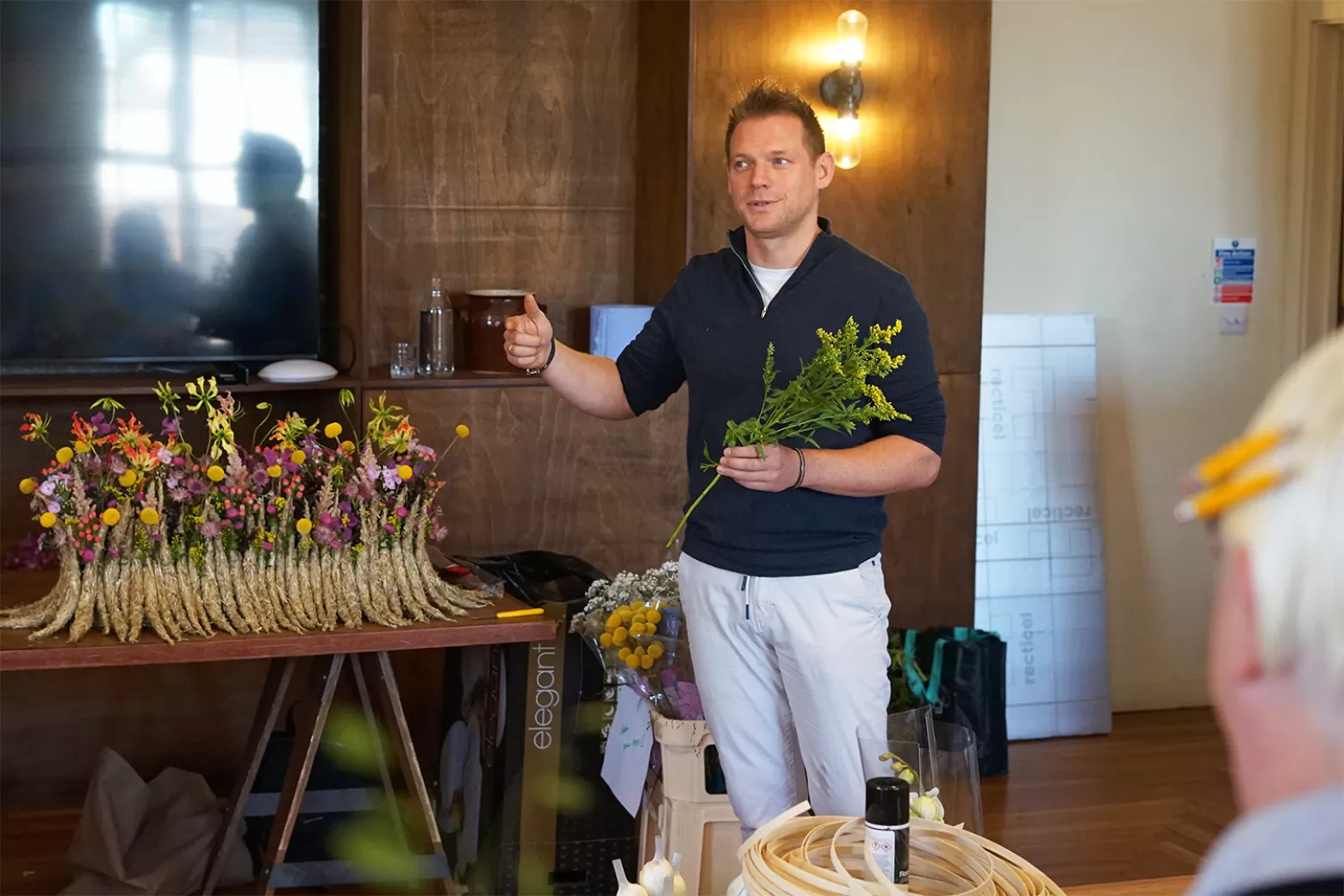
In a competition, a surprise task may leave you no choice. And Solidago proves his point perfectly.
“It isn’t a flower that immediately stands out, but if you take it away, something is missing.”
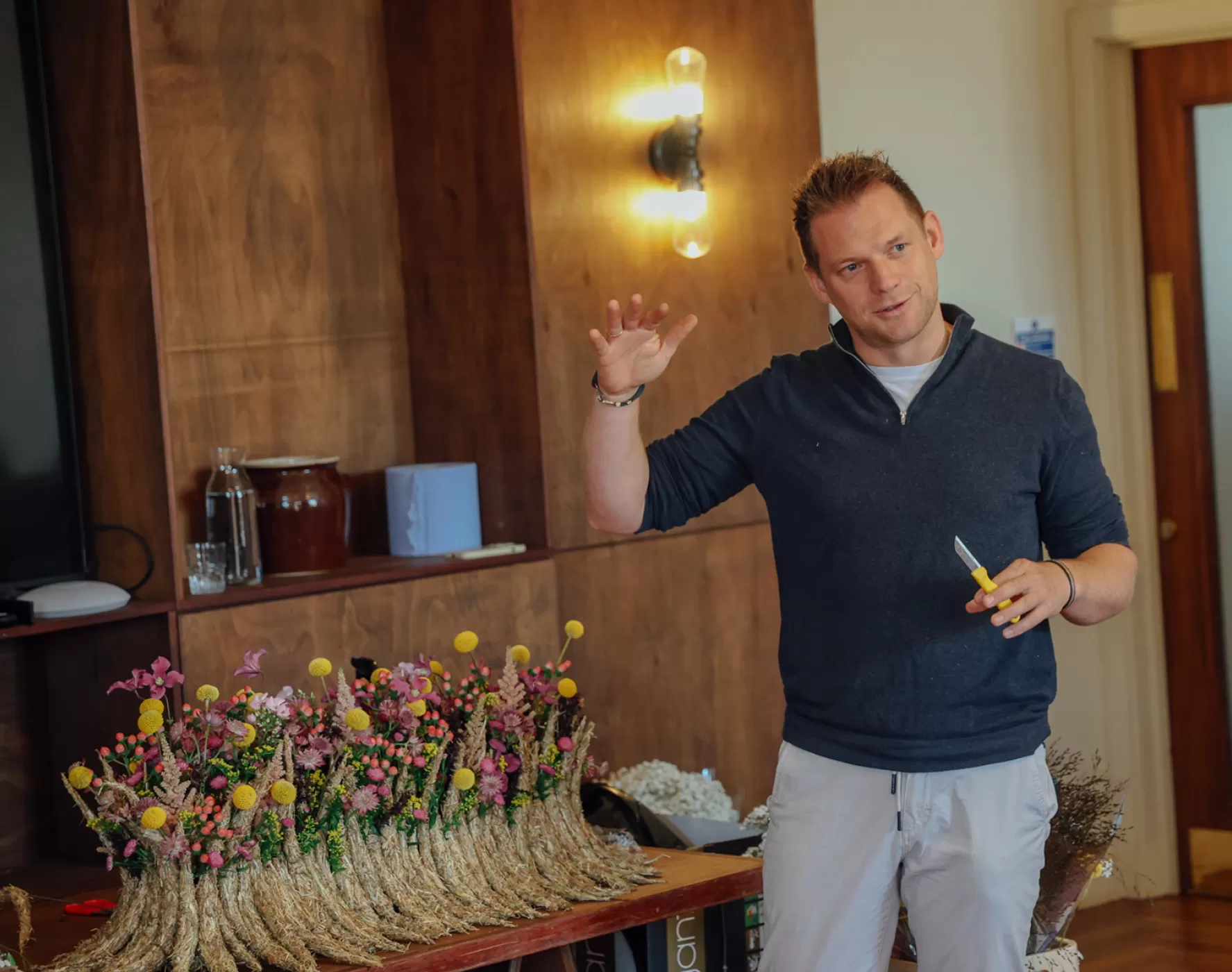
Around it, softer pink tones of Aster Flash, Astrantia Roma© and Phlox Pink Eyes sit alongside bright Craspedia Paintball™ Pop and playful Clematis Amazing© Kyiv. It is not about one flower demanding attention. It is about what every flower contributes to the whole.
Start with a strong foundation
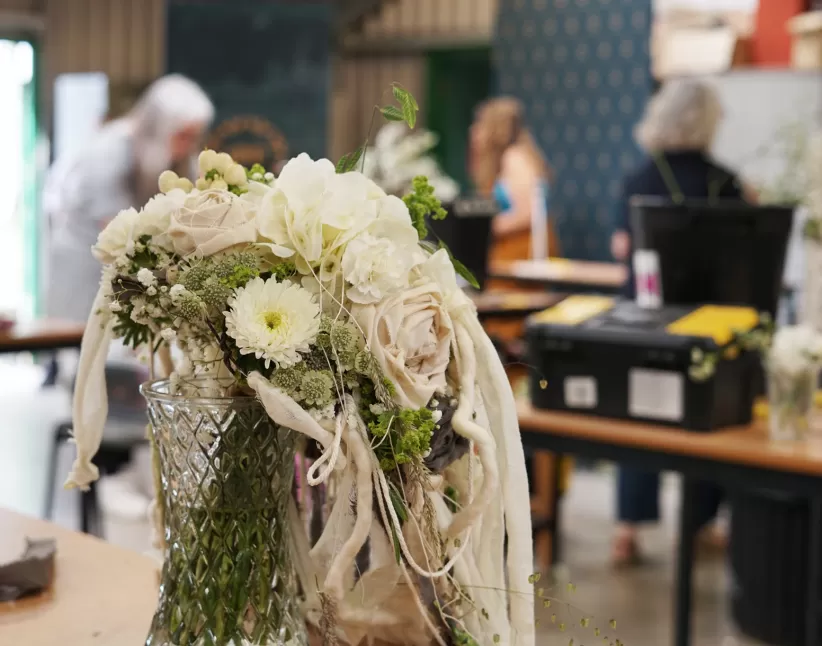
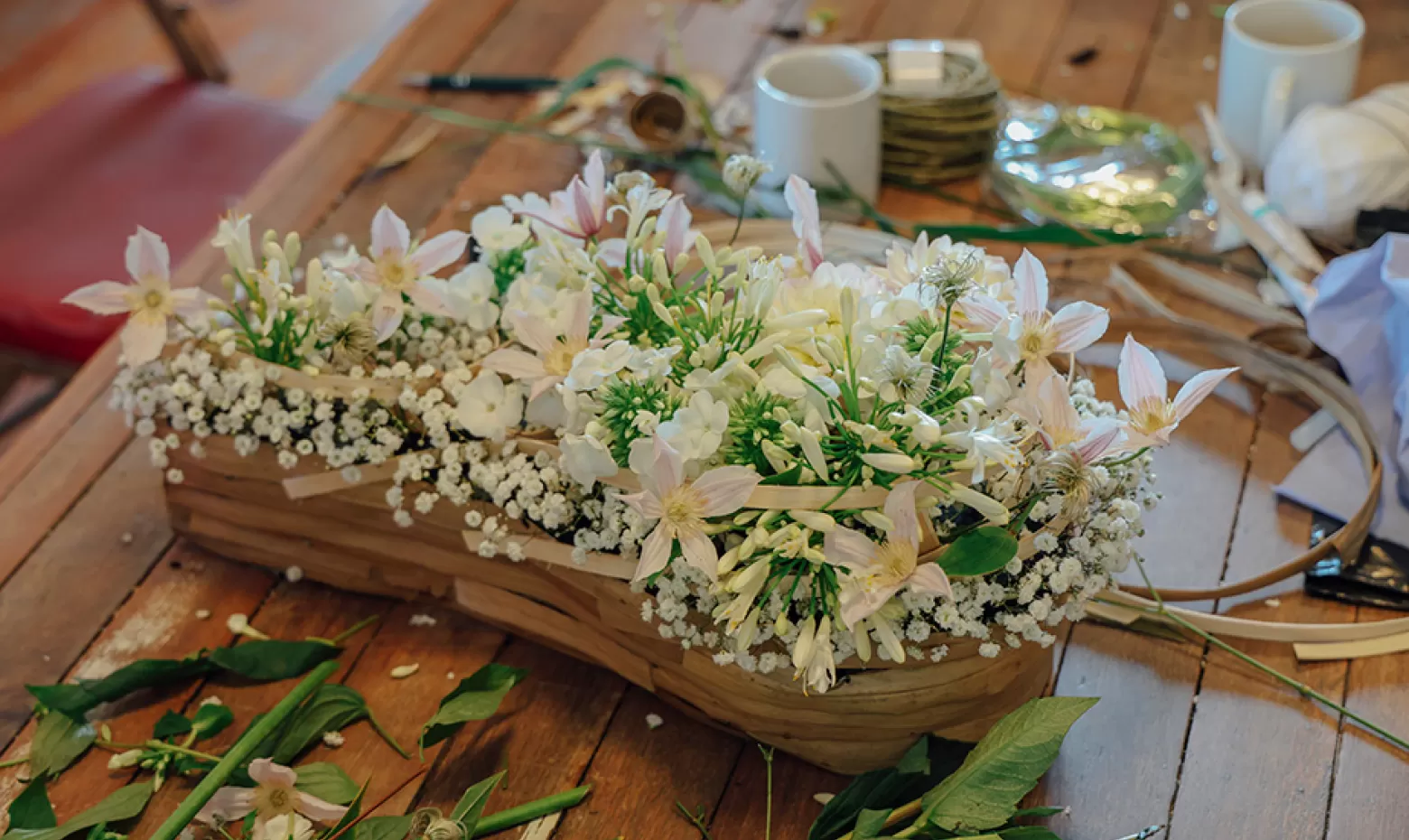
For the students’ first assignment, Stefan demonstrates a horizontal design using pastel and white flowers. The base is made with floral foam and finished with banana leaf. His own example is substantial, which causes a few concerned looks around the room. Stefan reassures them: it can be smaller. It can be another shape. They are creative people, after all. What matters is the foundation.
“The whole design depends on the basic shape. It needs to be strong. If the foundation isn’t right, the rest won’t be either.”
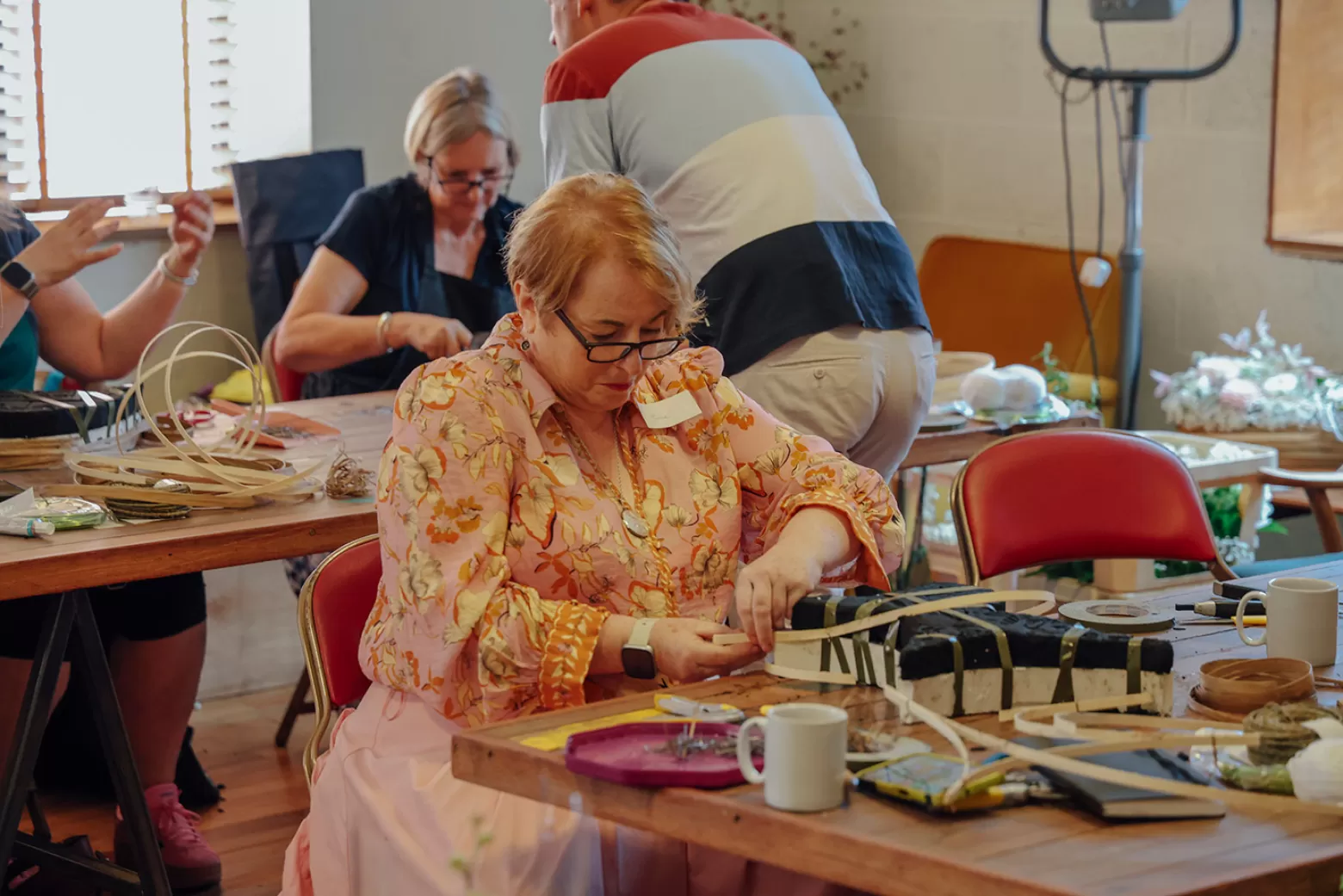
His competition experience comes through in the smallest details. How wire is used to bend into exactly the right form. How finishing matters. How every technical choice should support the final result. “Make it small, make it beautiful. Pay attention to detail.”
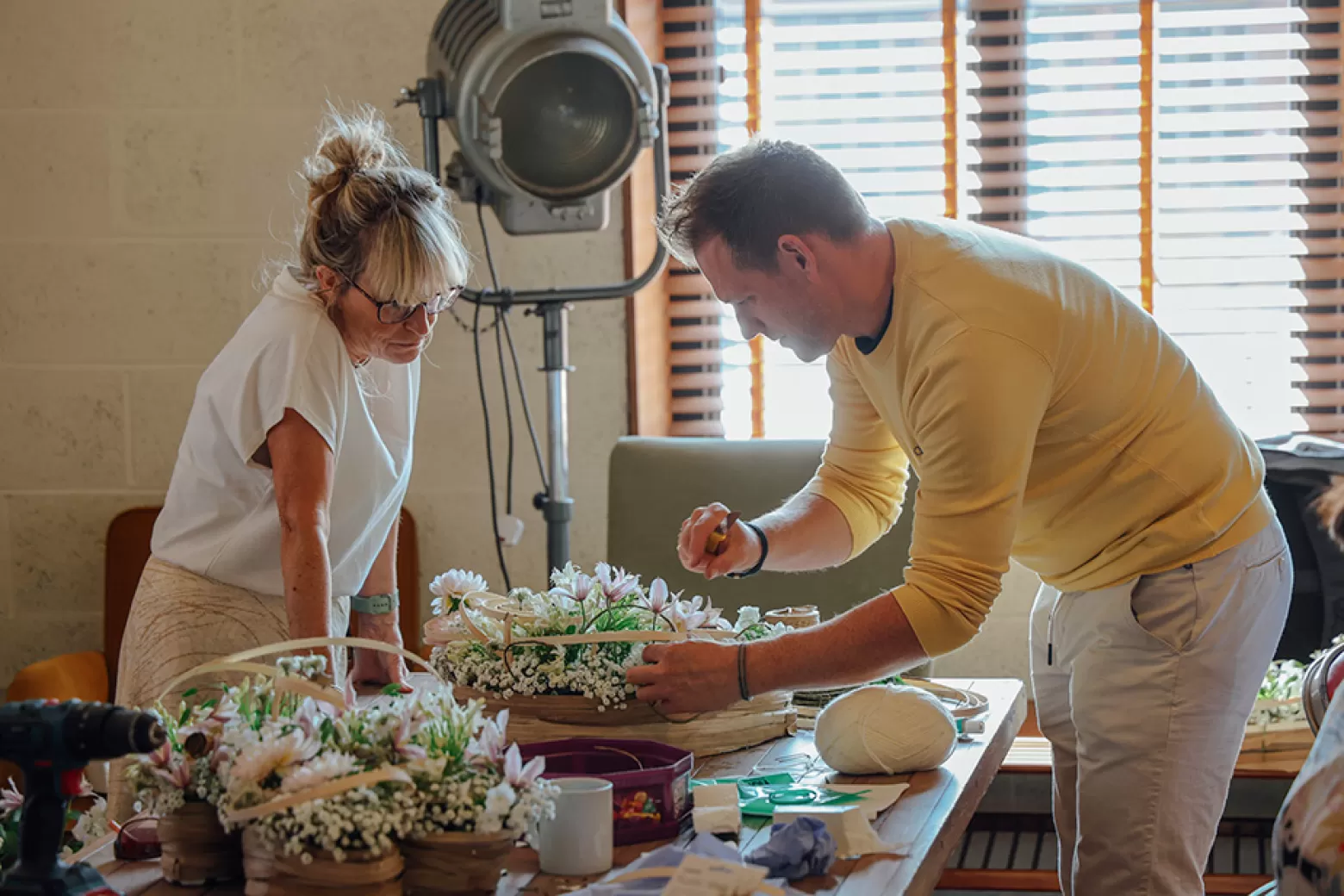
When adding flowers, Stefan groups them rather than distributing everything evenly. This creates quieter areas within the design and keeps the composition natural. The groups appear to grow towards and connect with one another. He points towards Scabiosa Bon Bon Scoop™ French Vanilla, Gypsophila Xlence© and Agapanthus Gletsjer. “Always look for different flower structures in your work. That makes a design stronger.”
Not everything can be calculated
One student notices that Stefan uses relatively little foliage. That is quite different from what many British florists are used to. Stefan agrees. His clients often specifically request less greenery. Instead, foliage that naturally belongs to flowers such as Solidago can become part of the design.
But how does he decide exactly where each flower should go? For Stefan, not everything follows a formula. He describes himself as an emotional florist. Placement is about balance and feeling. A design can be technically perfect and still lack soul. Some flowers therefore come in at the very end. Clematis is one of them. For Stefan, Clematis gives a design its final lift. He compares it to a chef adding seasoning at the end of a dish. In this design, soft pink Clematis Amazing® Kansas and the distinctive Clematis Amazing® Kibo add those finishing touches. Technique matters. But feeling does too.
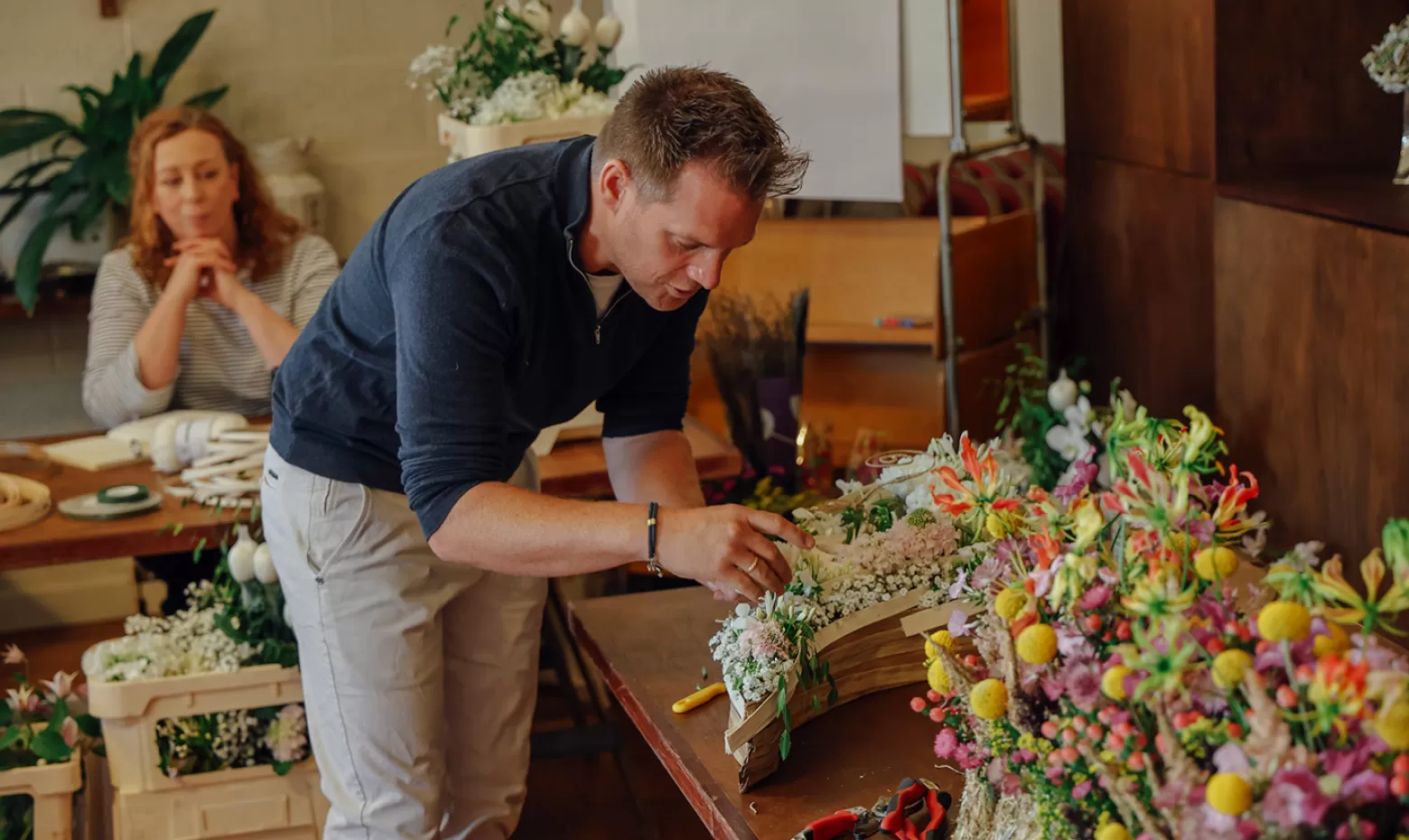
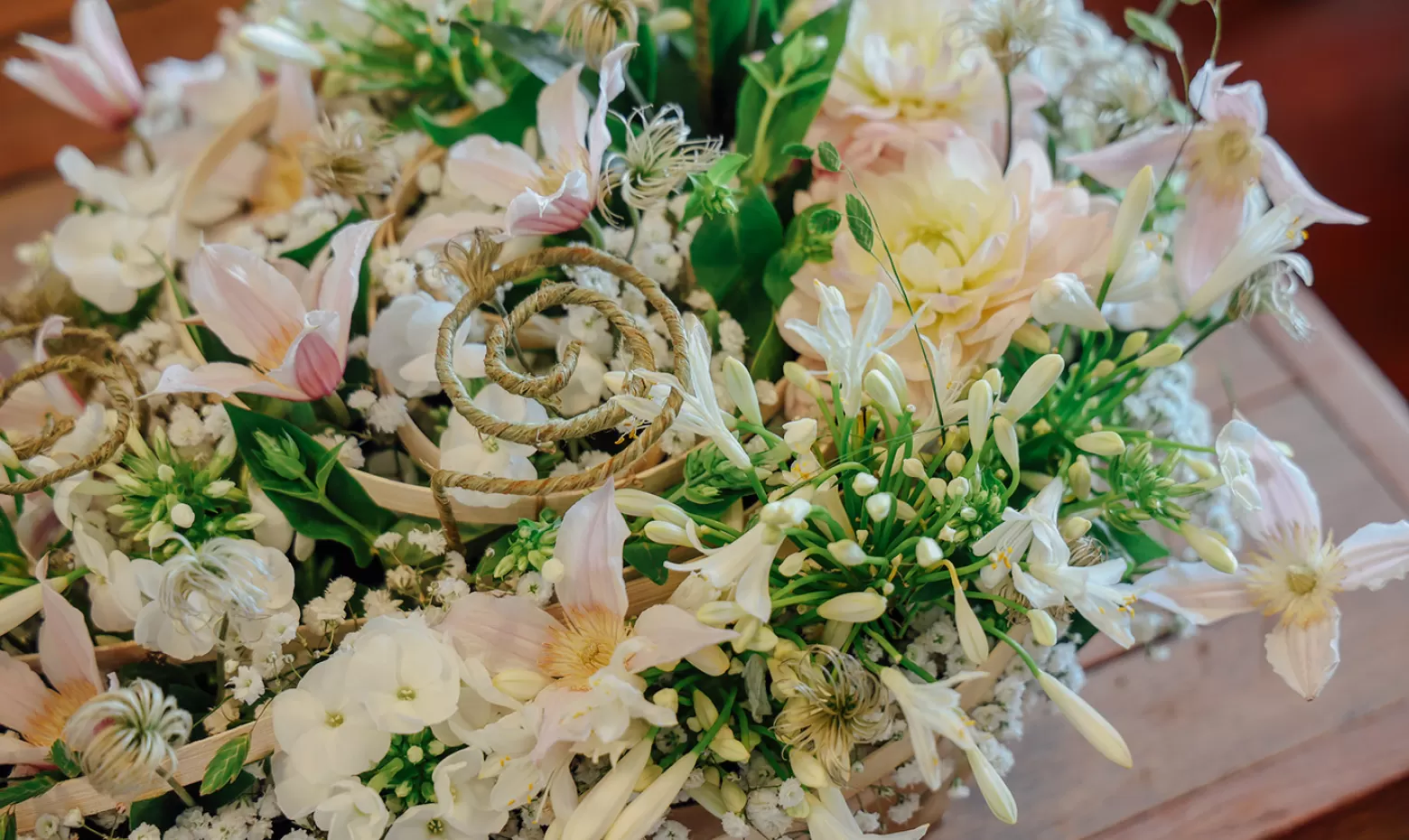
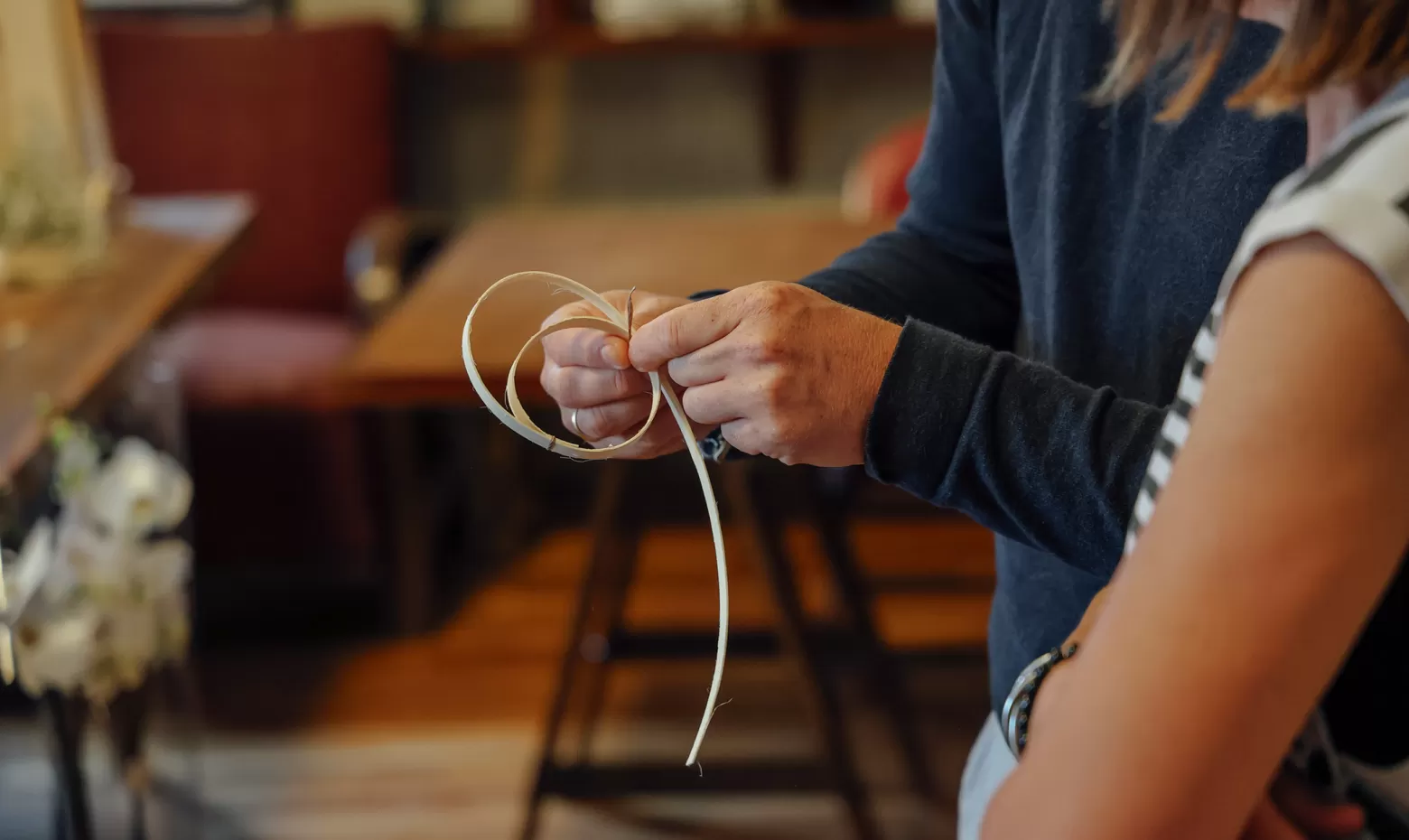
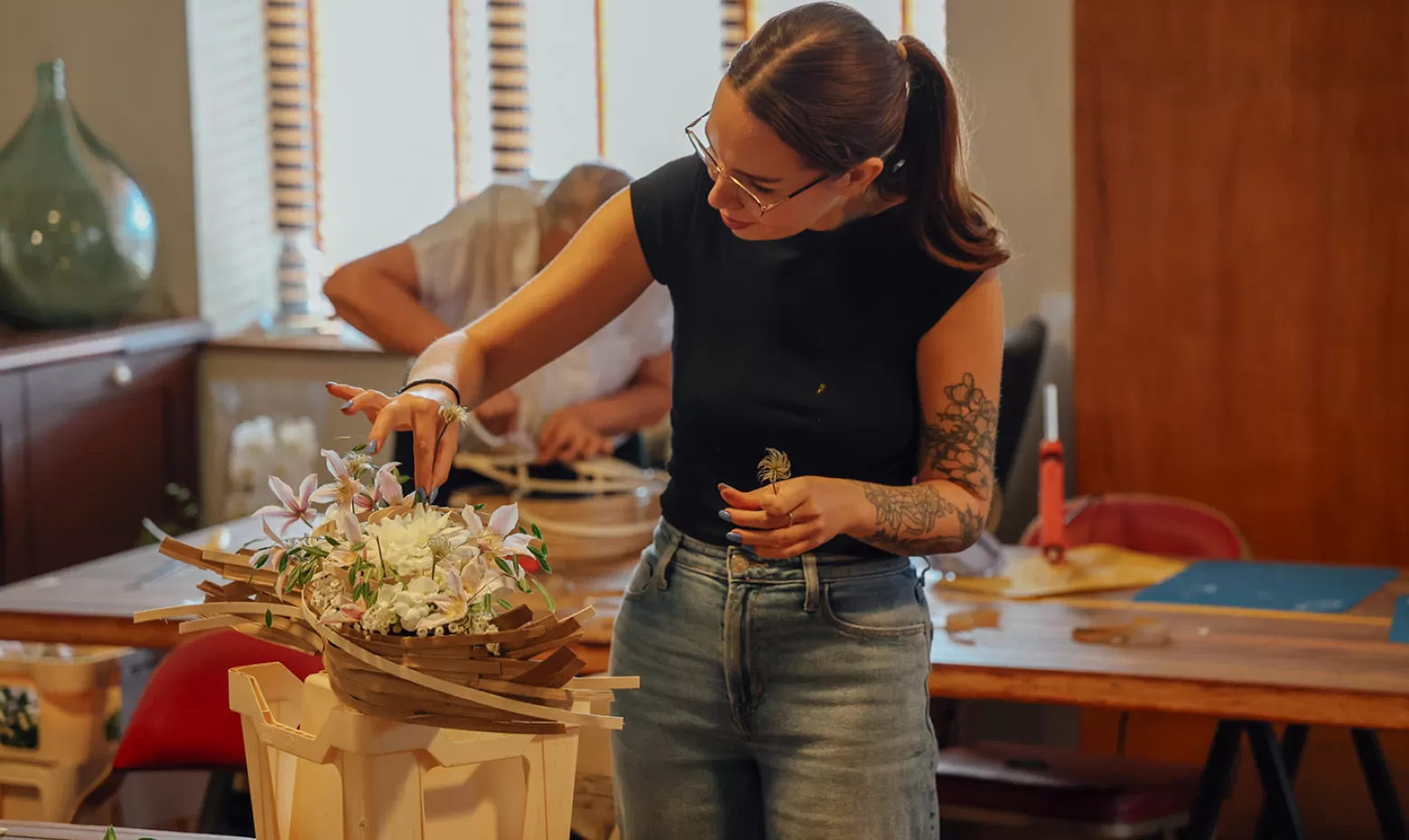
Use the arrows to view more behind the scenes photos
From funeral work to wedding flowers
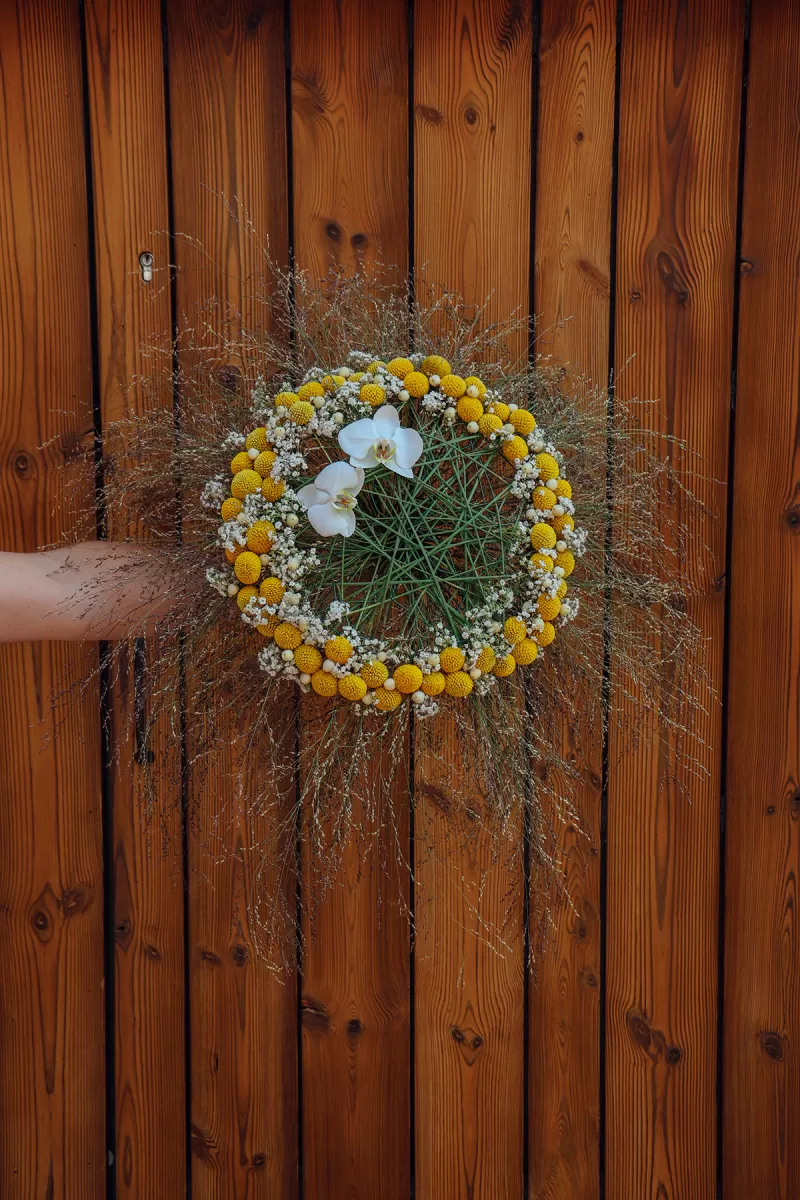
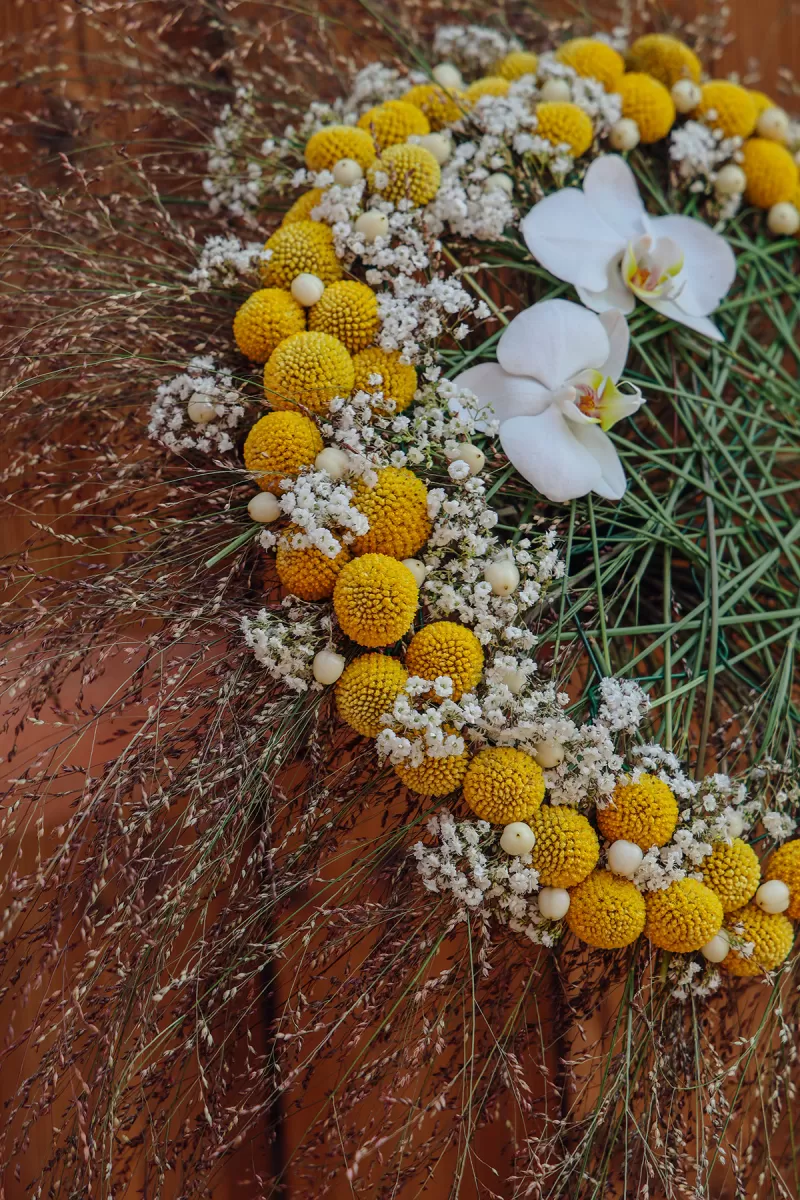
The next demonstration takes the class in a completely different direction. Stefan presents a round bouquet built around a base of Panicum Warrior, with Craspedia Paintball™ Pop and Gypsophila Million Daisy™ glued around the edge. White Hypericum and orchids are added while he explains the construction. Within minutes, a handle and framework appear from a length of wire. Does he measure the distances between the twists? He laughs. No. This, too, is done by feel.
When working with glued Hypericum berries, Stefan shares one very practical tip: give the glue a moment to dry before attaching the berry. Otherwise, it has a habit of sliding straight back off. The design is not necessarily something he expects to become a commercial bestseller. A hand-tied bouquet is quicker to produce and therefore more economical for most florists. But that is not always the point. Creating this type of work simply makes him happy.
A drill in the florist’s toolbox
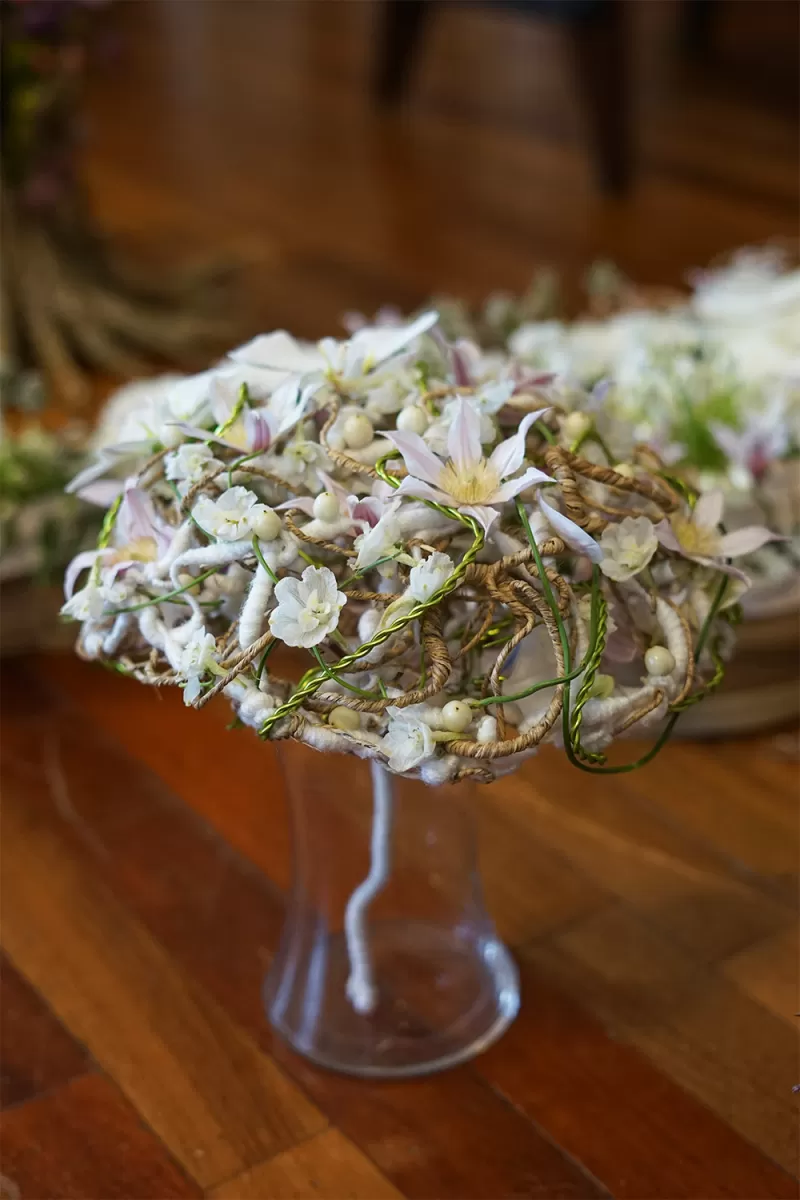
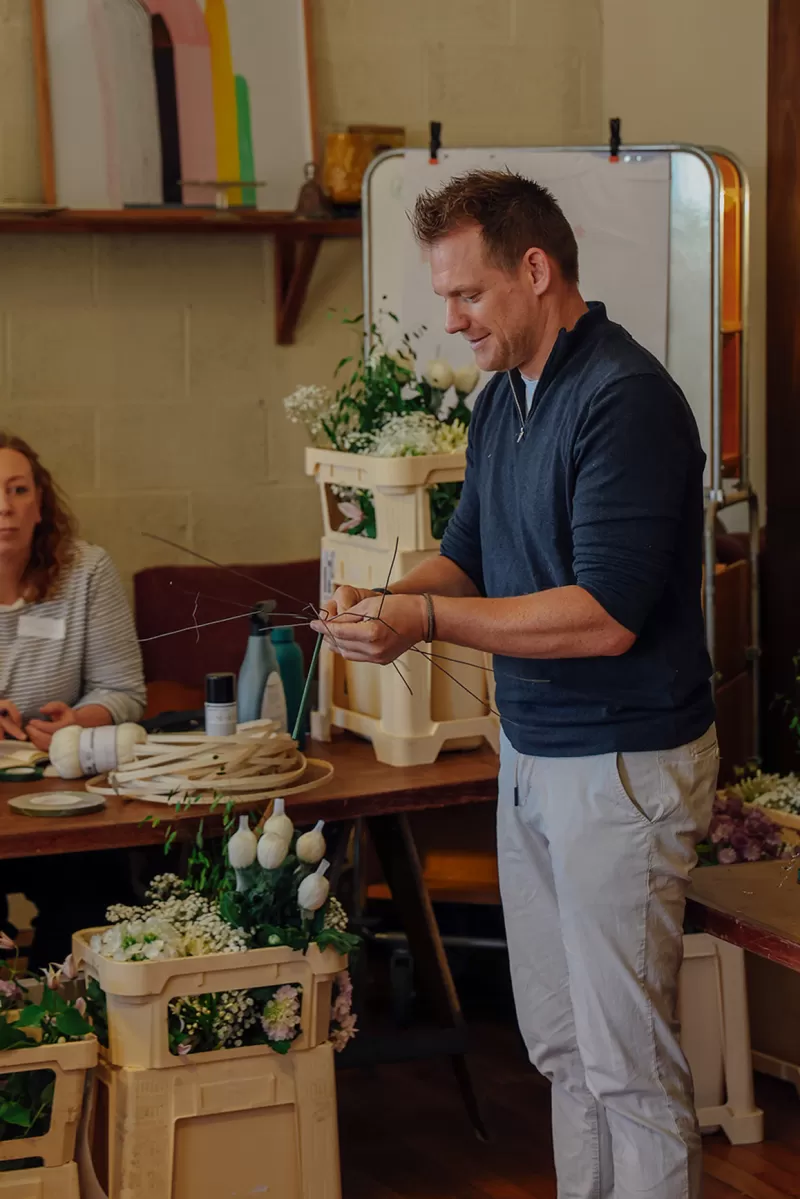
His final bridal design starts with a tool you may not immediately associate with floristry: a power drill. Stefan asked every student to bring one. Using wire, wool and the rotating drill, he demonstrates a quick way to wrap steel wire neatly in wool. This is combined with coloured aluminium wire and rustic wire to form the base of the bouquet. The advantage is preparation. The entire structure can be made weeks before the wedding, leaving only the fresh flowers to be added on the day itself.
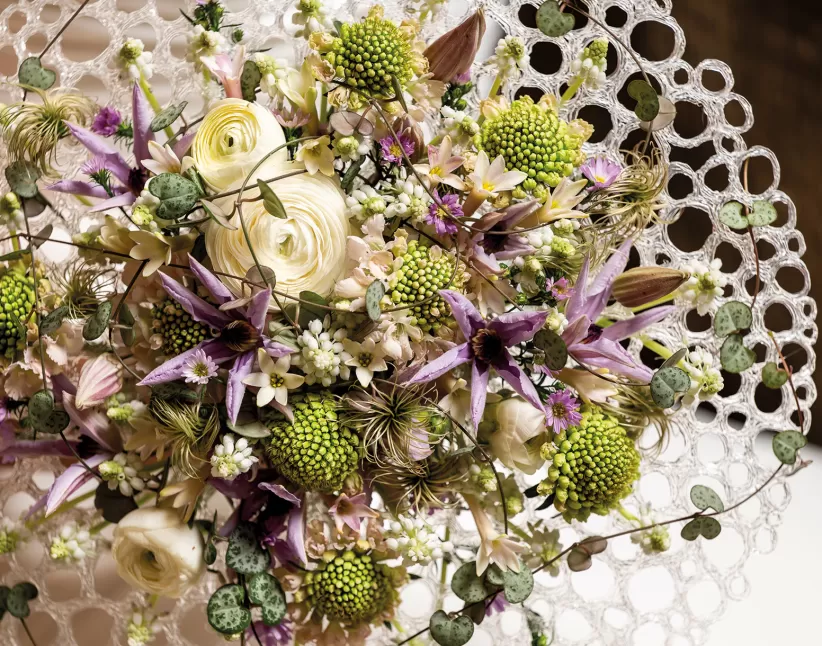
For this bouquet, Stefan works with Delphinium Bella Andes White, white Hypericum and Clematis Amazing® Kansas. Individual Delphinium florets are particularly suitable for gluing, he explains, although he prefers to attach them on the wedding day itself so they remain at their best for as long as possible. Flowers are positioned at different levels to create depth. At the same time, each bloom needs enough space. Never let the flowers suffocate one another.
And perhaps Stefan has weddings particularly firmly on his mind. His own wedding is approaching, and preparations are well underway. Even the four Dachshunds belonging to Stefan and his partner will have their own floral work as ring bearers. We already know which wedding detail we would like to see photos of ;)
Floral design: Stefan van Berlo
Photography: Joe Horner & Marginpar
Courtesy of the British Florist Association
Special thanks to Duyvenvoorde for taking care of the floral transport.